
The AI Summary card is the executive narrative layer of the dashboard. It translates posture, findings, scan history, and operational conditions into a structured summary that can be consumed by leadership, security management, architects, and engineers without requiring them to manually interpret every underlying metric.
Executive Summary
This section provides the headline interpretation of the current security state. It is designed to communicate whether posture is stable, improving, or degrading, and whether any immediate executive concern exists.
Security Posture Summary
This section presents the core operating indicators behind the AI narrative, including posture score, overall risk level, and open findings. It serves as the factual anchor for the broader executive interpretation.
Drift And What Changed
This section explains whether meaningful environmental or finding-level change has occurred since the prior assessment. It helps the reader understand whether the current posture reflects stability, regression, or operational disruption.
Priority Recommendations
This section provides immediate next-step guidance based on the current state. It is intended to direct engineering and security teams toward the most important operational or remediation action rather than offering generic advice.
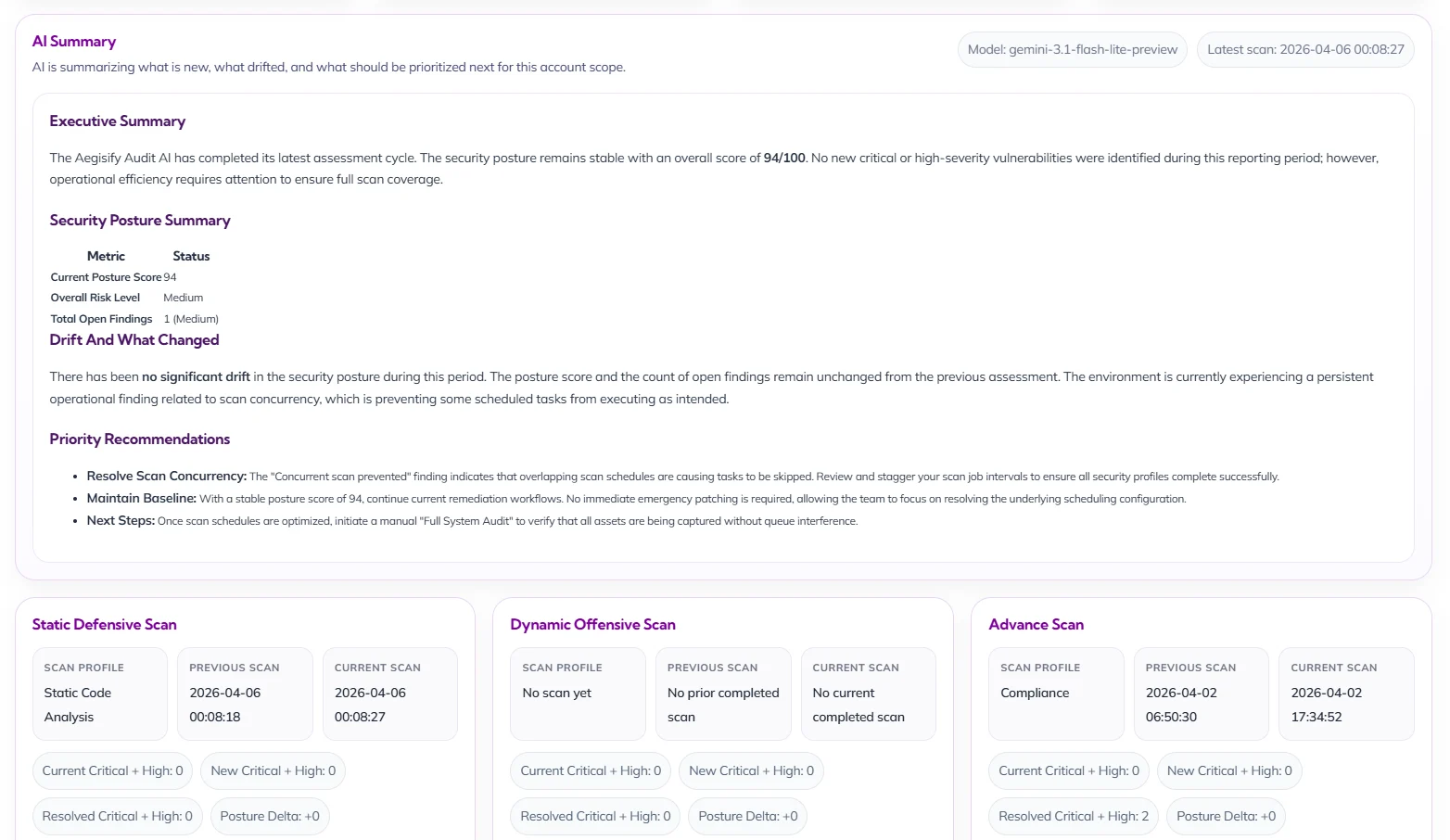
Static Defensive Scan
This card summarizes the current state of the defensive scan family for the selected scope. It compares historical and current execution, surfaces the latest profile in use, and provides a concise delta view so defensive posture can be reviewed quickly.
Scan Profile
This subcard identifies the defensive profile most relevant to the current comparison. It tells the user what type of defensive analysis is informing the displayed posture and trend.
Previous Scan
This subcard records the prior completed defensive scan used as the comparison baseline. It is important for understanding the time reference behind drift and delta calculations.
Current Scan
This subcard records the most recent completed defensive scan in scope. It establishes the latest point of reference for posture and findings interpretation.
Current Critical + High
This subcard shows the number of currently open top-severity defensive findings. It is the fastest measure of whether the latest defensive state includes urgent unresolved issues.
New Critical + High
This subcard shows how many top-severity defensive findings were introduced in the latest cycle. It helps determine whether new risk has emerged rather than simply persisted.
Resolved Critical + High
This subcard shows how many top-severity defensive findings were cleared between the prior and current cycles. It indicates whether remediation activity is materially reducing risk.
Posture Delta
This subcard shows the directional change in defensive posture between the compared scans. It is intended to convey improvement, regression, or stasis in a single compact metric.
Dynamic Offensive Scan
This card summarizes the state of the offensive scan family for the selected scope. It shows whether standard dynamic testing is actively contributing comparable data and makes gaps in offensive coverage immediately visible.
Scan Profile
This subcard identifies the offensive profile used for comparison when available. It tells the user what category of dynamic assessment is expected to inform the current state.
Previous Scan
This subcard records the last completed offensive scan in the comparison chain. It clarifies whether there is a valid offensive baseline available.
Current Scan
This subcard records the most recent completed offensive scan. It indicates whether the dashboard has current offensive evidence or whether the scope lacks recent runtime assessment.
Current Critical + High
This subcard reports the currently open top-severity offensive findings. It provides a direct view into the highest-signal runtime exposure still present.
New Critical + High
This subcard reports newly introduced top-severity offensive findings in the latest cycle. It helps distinguish fresh runtime exposure from older unresolved issues.
Resolved Critical + High
This subcard reports the number of offensive critical and high issues cleared since the prior cycle. It provides a concise signal of remediation progress in the offensive track.
Posture Delta
This subcard shows whether the offensive scan family has materially improved, regressed, or remained flat since the prior comparison point.
Advance Scan
This card summarizes the advanced scan family for the selected scope. It is intended to capture deeper or specialized assessment activity and present its comparative state in the same executive format used across the platform.
Scan Profile
This subcard identifies the advanced scan profile contributing to the comparison. It clarifies which specialized assessment lens is represented in the card.
Previous Scan
This subcard records the previous completed advanced scan available for comparison. It provides the historical reference for delta and resolution analysis.
Current Scan
This subcard records the current completed advanced scan used in the card. It defines the latest specialized assessment baseline available to the dashboard.
Current Critical + High
This subcard reports how many critical and high findings currently remain open in the advanced scan family.
New Critical + High
This subcard reports how many top-severity advanced findings were introduced in the latest comparison cycle.
Resolved Critical + High
This subcard reports how many advanced critical and high findings were closed between the prior and current scans.
Posture Delta
This subcard shows whether the advanced assessment family has improved, regressed, or remained stable relative to its prior comparison point.