In today’s digital economy, WordPress is no longer just a publishing platform, it is a mission-critical Application running marketing campaigns, ecommerce transactions, customer portals, and operational workflows.
That reality makes the WordPress API a primary attack surface for DDOS, automated abuse, and credential-based exploitation. Effective API Security, modern BOT Control, comprehensive Detailed Logs and Attack Story visibility, and intelligent Web Firewall Access enforcement are now foundational requirements for protecting the WordPress Application layer. Executives, WordPress administrators, small business owners, bloggers, and shop operators must treat the WordPress API as infrastructure, not a background feature.
This is where a true WordPress API Shield strategy becomes essential.
Why the WordPress API Is the New Front Line of Application Security
Modern WordPress is API-driven. From Gutenberg to ecommerce carts, mobile integrations, and third-party automation, the WordPress API powers the dynamic experience users expect. However, that same API layer also introduces exposure:
- Automated DDOS bursts targeting expensive REST endpoints.
- Bots repeatedly hitting search, login, or checkout APIs.
- Oversized payloads designed to exhaust PHP workers and database connections.
- Enumeration attempts probing for user data through API calls.
These are not theoretical risks. They are daily realities across the Web.
Traditional perimeter blocking is no longer enough. A modern WordPress Firewall Access model must understand routes, payload sizes, authentication expectations, and behavioral patterns. It must operate at the Application layer, not just at the IP layer.
WordPress API Shield: Application-Aware Web Firewall Access
An advanced WordPress API Shield does not simply “block traffic.” It evaluates the context of each API request before WordPress processes it.
At the core of API Shield protection is a layered runtime inspection model:
The request is normalized, including path, HTTP method, headers, query strings, cookies, body size, IP address, and user agent. This normalization prevents evasion tactics that attackers use to bypass superficial filters.
Then, route-based policies are applied. Administrators can define default actions for all API routes and override behavior per endpoint. The WordPress API Shield determines whether a request should be allowed, inspected, challenged, rate-limited, or blocked. This intelligent escalation is critical for balancing Security and user experience.
When a suspicious request targets an expensive endpoint, the system can respond progressively. A browser challenge may filter out automated tools while allowing legitimate visitors to continue. Rate limiting can suppress traffic spikes without creating unnecessary downtime. Hard blocking is reserved for confirmed malicious behavior.
This is not static firewalling. It is Application Security at runtime that is intelligent, contextual, and adaptable.
DDOS Mitigation Designed for WordPress API Traffic
Not all DDOS attacks aim to flood bandwidth. In WordPress environments, the more common pattern is targeted Application exhaustion. Attackers repeatedly hit endpoints like search or REST write routes to create CPU and database strain.
An effective WordPress API Shield includes a dedicated DDOS evaluation engine that:
- Groups endpoints by behavior profile.
- Applies configurable thresholds within defined time windows.
- Allows safe endpoint or IP allowlists to prevent operational disruption.
- Optionally ignores authenticated users to preserve administrator access during incidents.
By grouping API routes and applying differentiated thresholds, the system avoids treating all traffic equally. Search endpoints behave differently from checkout endpoints. Administrative APIs behave differently from public APIs. This nuanced handling strengthens WordPress Application Security without harming performance.
Intelligent BOT Control for API Protection
Modern bot traffic is sophisticated. It mimics browsers, rotates IP addresses, and leverages distributed infrastructure.
That is why strong BOT Control must combine pattern detection, behavioral heuristics, and route-specific logic. WordPress API Shield protection analyzes request behavior across time, not just single requests in isolation.
If the system detects repetitive abnormal behavior against the WordPress API, it can escalate automatically. Bots attempting enumeration or brute-force style abuse are intercepted before they impact the Web Application’s stability.
The result is measurable uptime protection, a direct business outcome for marketing campaigns, ecommerce funnels, and customer portals.
Detailed Logs and Attack Story: Turning Security into Business Intelligence
Executives and administrators require more than silent blocking. They need transparency.
A professional WordPress API Shield integrates structured event logging that records route, method, IP, user agent, action taken, and decision category. These logs form a Detailed Logs and Attack Story capability that transforms raw security data into operational insight.
When a traffic surge occurs, marketing leaders can correlate the event with campaign timing. Administrators can see whether the activity was a legitimate spike or a coordinated DDOS attempt. Executives can review a clear narrative: what happened, how it was mitigated, and what impact was prevented.
This visibility shifts Security from reactive firefighting to proactive governance. It builds confidence at every level of the organization.
Firewall Access Controls Beyond the API Layer
API Shield is only one dimension of comprehensive WordPress Security. True Web Firewall Access enforcement also includes path-based access gating for specific URLs. Administrators can require login, restrict by IP or CIDR, or enforce role-based access on sensitive paths.
This reduces exposure for staging endpoints, administrative tools, and operational routes that should not be publicly reachable. Combined with API Shield, it closes multiple angles of attack before they escalate into service disruption.
The Business Impact of WordPress API Security
For WordPress owners, small business operators, and ecommerce shops, downtime is revenue loss. For marketing executives, it disrupts campaigns and analytics. For administrators, it creates operational instability. For executives, it damages brand trust.
A properly implemented WordPress API Shield delivers:
- Reduced risk of API-driven DDOS outages.
- Controlled BOT Control at the Application layer.
- Real-time Web Firewall Access enforcement.
- Actionable Detailed Logs and Attack Story visibility.
This is not theoretical hardening. It is practical risk reduction that supports uptime, conversion continuity, and long-term brand resilience.
Unified Protection: Aegisify WAF + Aegisify Shield
When WordPress API Shield protection is paired with a comprehensive Web Firewall and system-level hardening, the security posture strengthens dramatically.
Aegisify WAF provides the Web Firewall Access, API Shield enforcement, DDOS evaluation, BOT Control, route policies, behavioral analysis, and Detailed Logs and Attack Story visibility. It protects the WordPress Application from the outside in, intercepting malicious requests before they consume resources.
Aegisify Shield extends protection within the WordPress environment itself. It focuses on platform hardening, login protection, file integrity monitoring, and broader WordPress Security controls. It safeguards the Application from the inside out defending authentication flows, monitoring changes, and reinforcing core WordPress behavior.
Together, Aegisify WAF and Aegisify Shield form a unified Security platform that protects WordPress from all angles:
- API exploitation
- DDOS pressure
- Automated bot abuse
- Unauthorized access attempts
- Application-layer anomalies
- Internal platform vulnerabilities
This unified architecture transforms WordPress from a common Web target into a hardened, resilient Application platform. For executives and operators alike, that means confidence: confidence that the WordPress API is secure, that the Firewall Access layer is intelligent, that DDOS and BOT Control are enforced dynamically, and that Detailed Logs and Attack Story visibility provide clarity when it matters most.
In a world where WordPress powers real business outcomes, comprehensive API Shield protection is no longer optional, it is strategic infrastructure.
Aegisify News and Articles

 2026 #1 WordPress Security Application : WordPress Security, Application Security, Web Application Hardening, Login Guard & File Integrity Unified Gallery
2026 #1 WordPress Security Application : WordPress Security, Application Security, Web Application Hardening, Login Guard & File Integrity Unified

 2026 #1 WordPress SEO: AI SEO + Google Search Console (GSC Overview, GSC Schema Intelligence & GSC Search Stats) : Easy to Deploy, Advanced Intelligence Powered by Google Cloud Gallery
2026 #1 WordPress SEO: AI SEO + Google Search Console (GSC Overview, GSC Schema Intelligence & GSC Search Stats) : Easy to Deploy, Advanced Intelligence Powered by Google Cloud




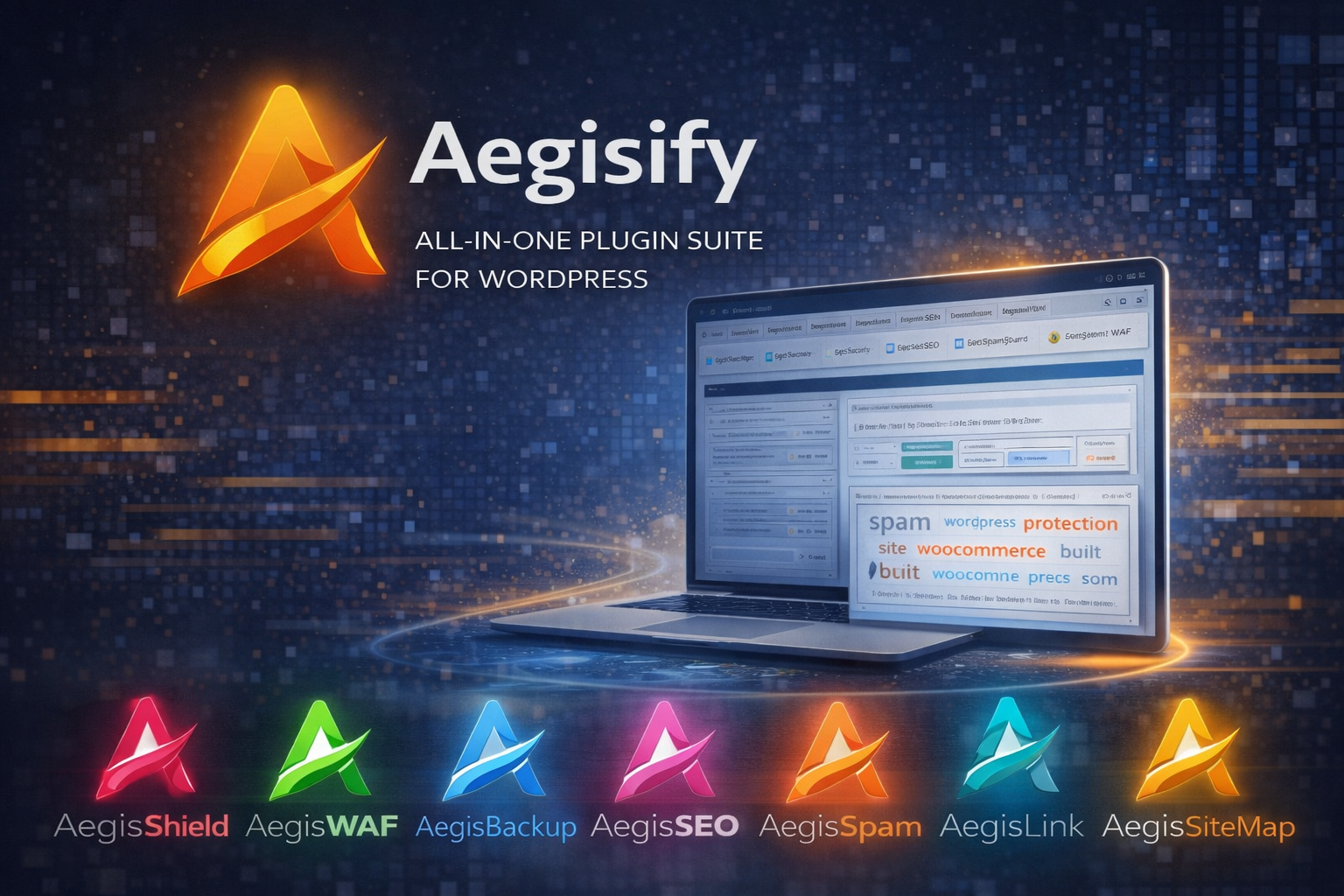



- WordPress API Shield Protection: WordPress API, DDOS, BOT Control, Detailed Logs and Attack Story for Application Security with Web Firewall Access Gallery
WordPress API Shield Protection: WordPress API, DDOS, BOT Control, Detailed Logs and Attack Story for Application Security with Web Firewall Access

 WordPress Short Links, Smart Linking, SEO, Word Cloud, Bulk Linking, WooCommerce, Analytics & Link Tracking : The Executive Guide to Modern WordPress Growth Gallery
WordPress Short Links, Smart Linking, SEO, Word Cloud, Bulk Linking, WooCommerce, Analytics & Link Tracking : The Executive Guide to Modern WordPress Growth