AI SEO Infrastructure for WordPress: LLM Discovery, Crawler Governance, and Measurable AI Signals
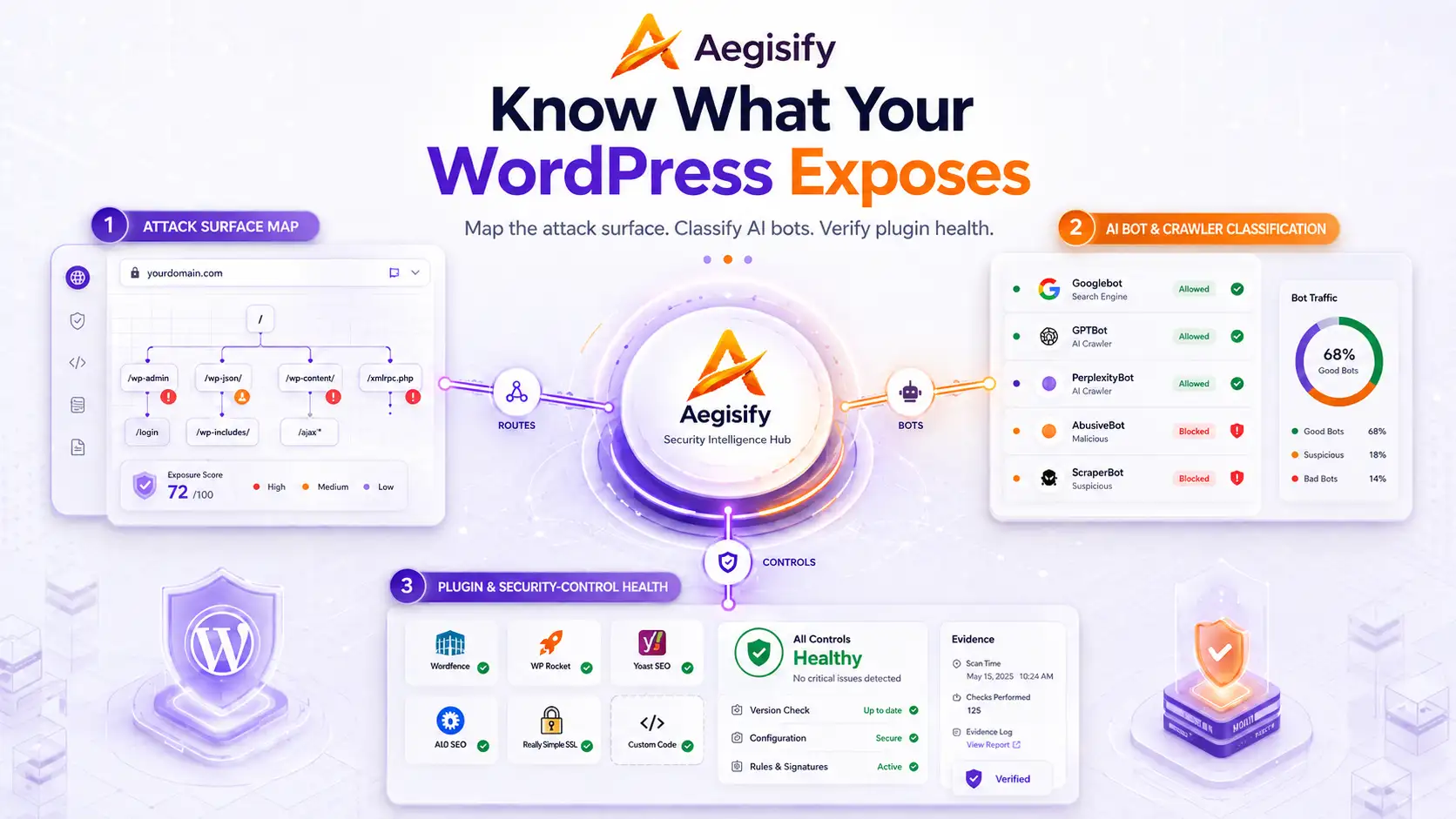
WordPress AI SEO now extends beyond content scoring and metadata. Serious websites need LLM discovery, machine-readable public inventories, AI crawler governance, privacy controls, AI bot intelligence, referral measurement, and a disciplined way to separate search visibility from model-training access. Aegisify SEO brings those operational controls into WordPress through its AI SEO and Machine-Readable Discovery workflow.
The goal is not to replace technical SEO or promise placement in an answer engine. It is to inventory approved public content, govern crawler access, reduce accidental disclosure, measure observable activity, and preserve durable search fundamentals.
What LLM Discovery Actually Means
AI search systems do not all discover or use web content the same way. Some rely on search indexes, dedicated crawlers, user-requested fetching, or separate training crawlers. Their policies and user agents can change.
A responsible AI SEO strategy therefore has four jobs: make intended public information clear, prevent private or low-value material from entering public discovery inventories, control crawler access by purpose, and measure what can actually be observed. It should never equate a crawler visit with indexing, citation, recommendation, or revenue.
Discoverability
Publish clean, canonical, internally linked content and provide supplemental inventories that describe approved public pages, products, and documentation.
Interpretability
Use clear entities, descriptive headings, accurate schema, useful documentation, and consistent product or service naming across the site.
Governance
Choose which content types, plugins, products, and documentation surfaces are public while separating search-crawler and training-crawler policy.
Measurement
Track crawler activity and referrals as directional signals, then compare them with Search Console, analytics, business outcomes, and verified public output.
Beyond the XML Sitemap—Without Replacing It
XML sitemaps remain an important search-discovery mechanism. Google's current guidance for generative AI features continues to prioritize normal SEO eligibility: a page must be indexed and eligible to appear with a snippet. Google also states that it does not use llms.txt or other special AI files as a requirement or ranking signal.
Supplemental resources can still provide a curated inventory for systems, agents, integrations, or internal workflows that consume them. Aegisify SEO treats them as an additional documentation layer—not a substitute for indexable HTML, sitemaps, schema, or search quality systems.
| Public Resource | Operational Purpose | Important Limitation |
|---|---|---|
/llms.txt | Primary markdown-oriented index of selected public content and documentation. | No universal search-ranking benefit and no guaranteed support by an AI provider. |
/llm.txt | Legacy compatibility file retained for workflows that still request the singular filename. | Aegisify documents /llms.txt as the primary markdown index. |
/ai.txt | Public AI crawler and discovery guidance generated from approved configuration. | Provider behavior still depends on each crawler's documented policy. |
/ai-index.json | Machine-readable inventory of approved public site, product, or documentation records. | Must exclude private records, draft content, sensitive routes, and stale commerce data. |
/sitemap-ai.xml | AI-oriented URL inventory that complements the site's standard sitemap architecture. | Does not guarantee crawling, ingestion, citation, or inclusion in an answer. |
Generate Human, Machine, and Markdown Surfaces Only When Approved
Aegisify SEO can optionally generate public documentation folders for selected sources: /docs//index.html for human-readable HTML, /specs//aegisify.json for machine-readable specifications, and /ai-docs//documentation.md for AI-friendly Markdown.
Administrators choose the sources and scope. This supports product documentation, public services, approved plugin capabilities, knowledge bases, and selected custom post types without documenting every internal object.
Prevent AI Documentation From Becoming an Information-Leakage Project
Public discovery files must be treated like any other published endpoint. Aegisify SEO's Privacy Mode is designed to reduce unnecessary exposure of version numbers, plugin paths, internal routes, cron hooks, and known implementation details. Public URL Sanitization Mode removes query strings, limits inventories to published public content, and excludes attachments unless explicitly selected.
Before enabling optional outputs, review private paths, customer records, checkout and account pages, unpublished content, internal APIs, query parameters, staging references, and proprietary documentation. A clean inventory is safer and more useful.
Separate Search Discovery From Potential Training Access
AI crawler policy should not be reduced to one global "allow AI" toggle. OpenAI documents OAI-SearchBot for search discovery separately from GPTBot for potential model-training use. Anthropic also publishes separate crawler controls and robots.txt guidance. Organizations may choose different policies for search retrieval, user-triggered fetching, training, and general web indexing.
Aegisify SEO exposes the broader distinction between search-oriented AI access and training-oriented access. The final public robots.txt remains the source that must be reviewed. Robots directives are crawler guidance, not authentication or access control; sensitive content must still be protected by real authorization.
Measure Observable Activity Without Calling It Citation Proof
When tracking is enabled, Aegisify SEO can count recognized AI crawler requests without storing IP addresses and can maintain anonymous human totals for directional comparison. Advanced views can include AI bot visits, LLM referrals, unique crawler types, period-over-period movement, AI-versus-human ratios, access-policy observations, and crawl-impact or extraction indicators.
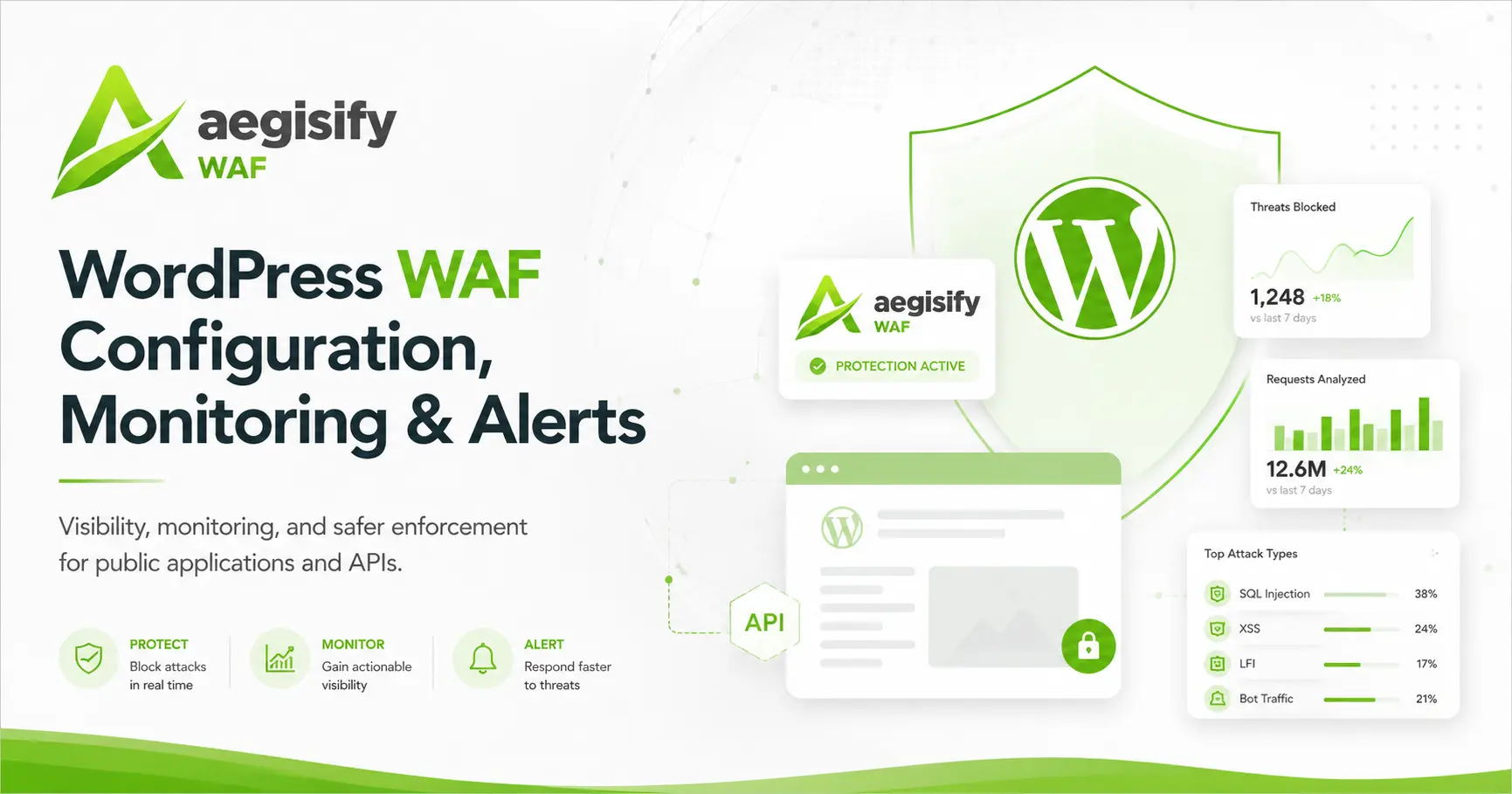
These signals show which recognized crawlers reach the site, whether activity is increasing, which URLs attract access, whether referrals appear, and whether crawler policy matches organizational intent. They do not prove training, indexing, citation, recommendation, or monetization.
The Governed AI Discovery Workflow
Connect AI Signals With Search and Business Evidence
Google introduced dedicated generative AI performance reporting in Search Console in 2026, giving site owners a Google-specific view of impressions in AI Overviews, AI Mode, and supported generative experiences. That report should be interpreted separately from third-party crawler telemetry and referral data.
Aegisify SEO combines indexability, Search Console performance, schema clarity, discovery files, crawler policy, AI observations, and evidence. This supports better decisions without inventing an "AI authority score" that no platform recognizes.
AI SEO and LLM Discovery FAQ
Does llms.txt improve Google rankings or AI Overviews visibility?
No. Google states that it does not use llms.txt or similar special AI files for Search visibility. Use it as a supplemental public inventory, not a ranking tactic.
Does an AI crawler visit prove that my content was cited?
No. A visit proves only that a recognized user agent requested a resource. Citation, indexing, training, recommendation, and referral are separate events.
Can I allow AI search discovery while blocking training?
Some providers publish separate user agents for these purposes. OpenAI, for example, distinguishes OAI-SearchBot from GPTBot. Always review the provider's current documentation and your final public robots.txt.
Should private content be listed in AI discovery files?
No. Discovery inventories should contain only approved public content. Authentication, authorization, noindex policy, private-path controls, and source selection must still protect sensitive material.
How often are Aegisify SEO discovery files refreshed?
The documented workflow supports manual generation and a scheduled nightly refresh. Reliable WordPress cron or server cron, file permissions, and output verification are required.
AI Discovery and Crawler-Governance References
Editorial references include the Aegisify SEO Product Guide, Google's generative AI SEO guidance, Google's generative AI Search Console reporting announcement, OpenAI publisher and crawler guidance, Anthropic crawler guidance, and Google robots.txt guidance.