Security at Aegisify: Built for Serious WordPress Audit Workflows
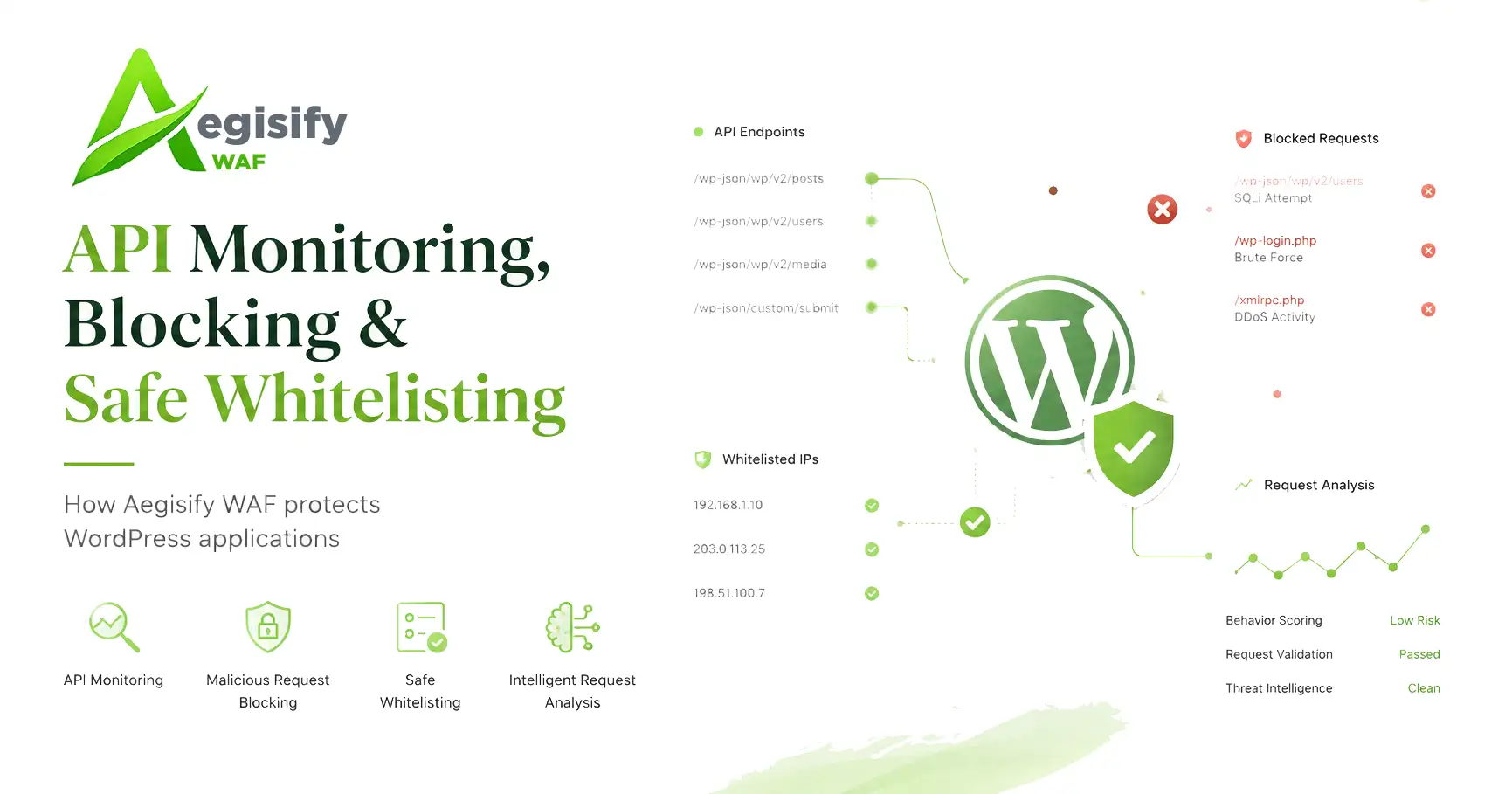
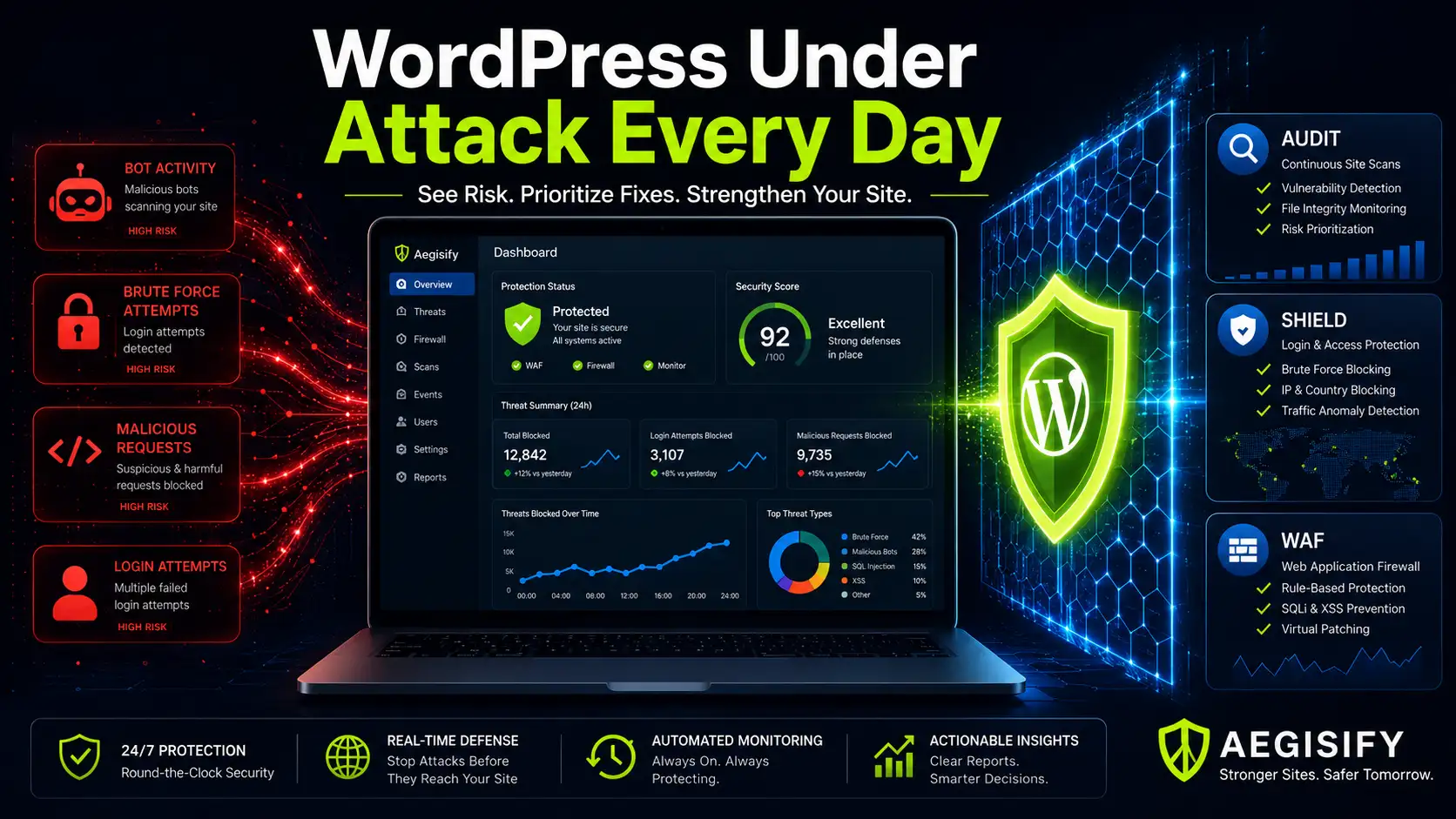
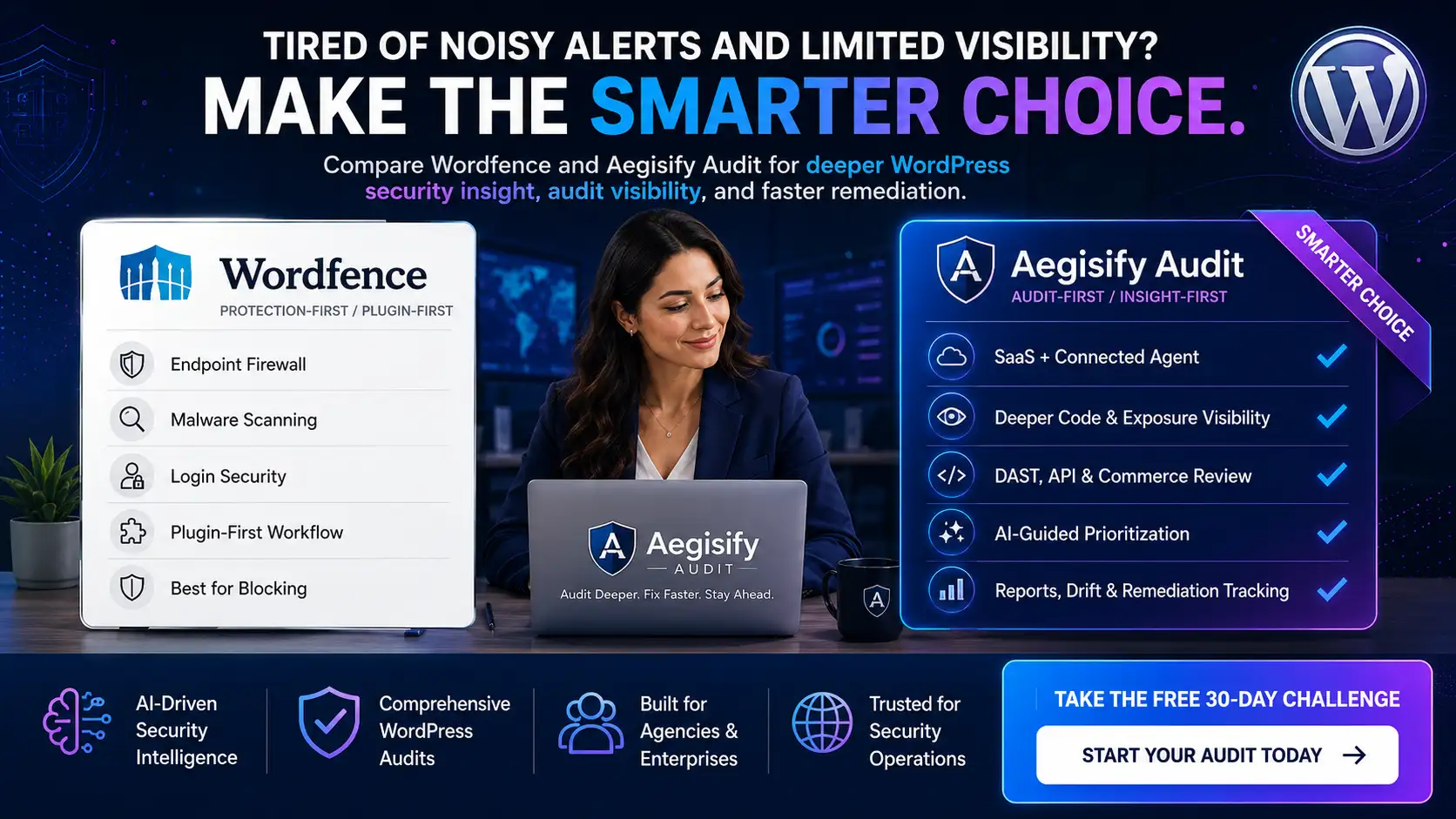
Aegisify Audit gives WordPress professionals, marketers, executives, and security architects clear visibility into how access is authorized, what security data is reviewed, and how findings are prioritized.
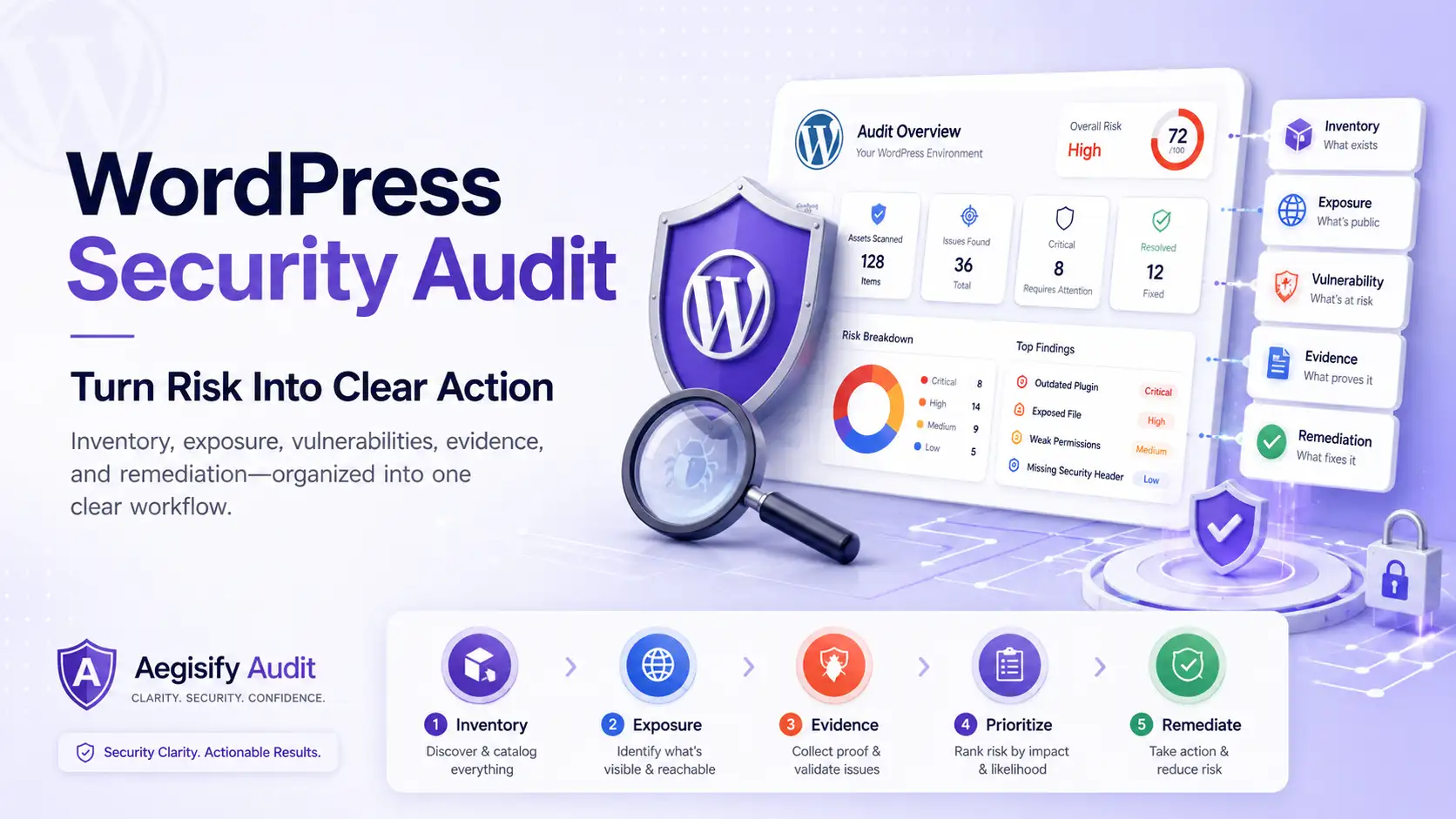
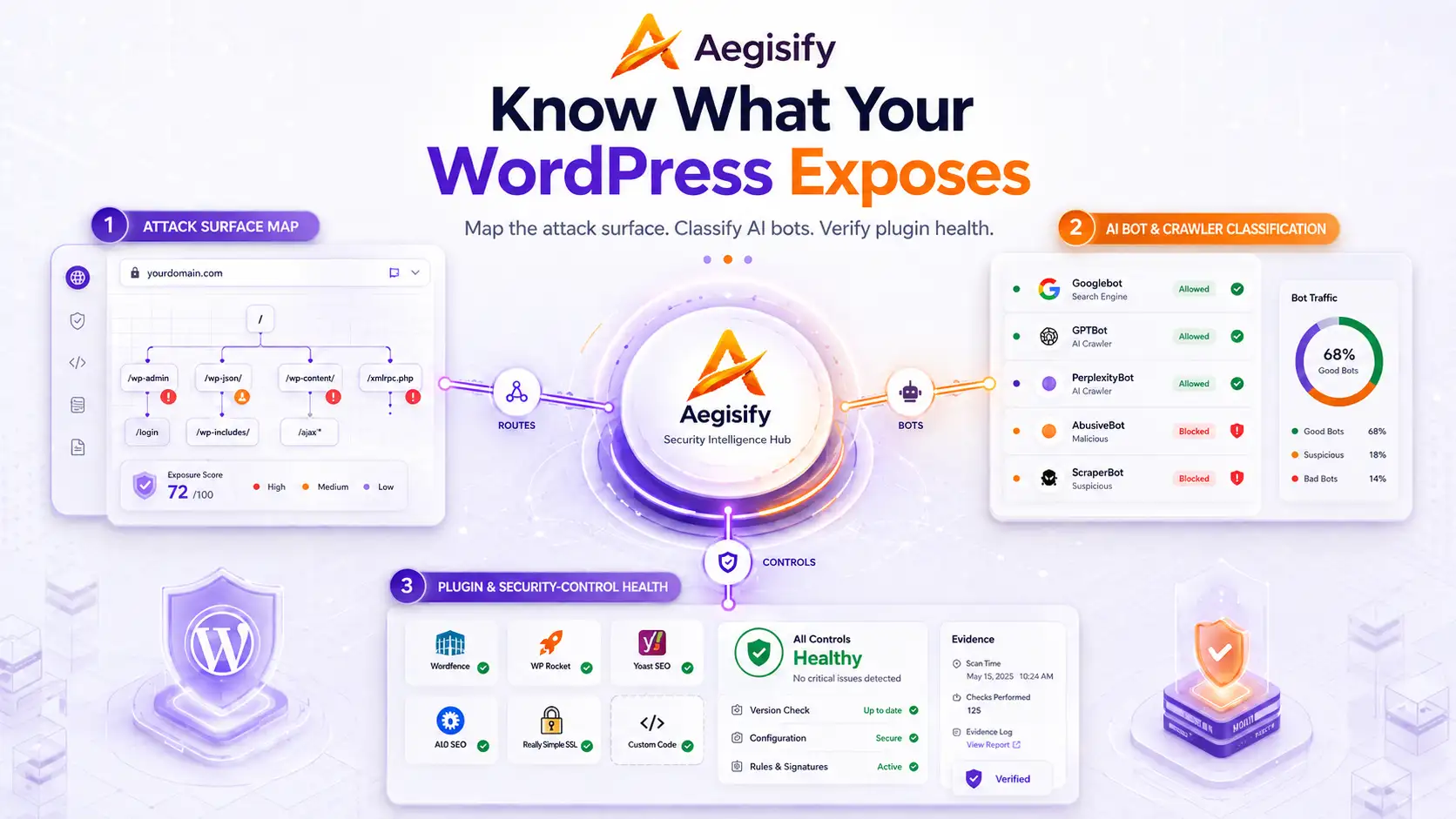
It combines public exposure, plugin and theme risk, configuration, SAST-style code analysis, DAST-style checks, optional logs, and AI-assisted prioritization in one workflow showing what matters, why it matters, and what should be addressed first.

How can Aegisify AI help?
Ask about Aegisify or WordPress: errors, plugins, security, SEO, compatibility, troubleshooting, comparisons, or launch a free website scan.
Aegisify Facts & Truth
Security Principles Built for Serious WordPress Environments
WordPress security decisions require more than a list of alerts. Website owners, marketing teams, executives, developers, and security architects need to understand what was detected, why it matters, what business or technical risk it creates, and which action deserves attention first.
Aegisify Audit is designed around clear access, controlled telemetry, evidence-led findings, and human-reviewable recommendations. The goal is to give authorized teams deeper WordPress security visibility without turning the Agent into an unrestricted content collection tool.
- Focused technical access: Aegisify Agent collects the supported technical signals needed to evaluate WordPress security posture, configuration, software risk, and operational activity.
- Customer-authorized connection: An authorized WordPress administrator installs, activates, connects, and configures the Agent.
- Controlled telemetry: Supported activity and diagnostic log sources remain visible and configurable within the customer’s WordPress environment.
- Evidence-led findings: Security results help teams understand what was observed, why the finding matters, and which response should be evaluated.
- Human-reviewable AI: Artificial Intelligence helps organize, summarize, and prioritize findings while keeping security and remediation decisions under human control.
Deeper WordPress Visibility From One Connected Workflow
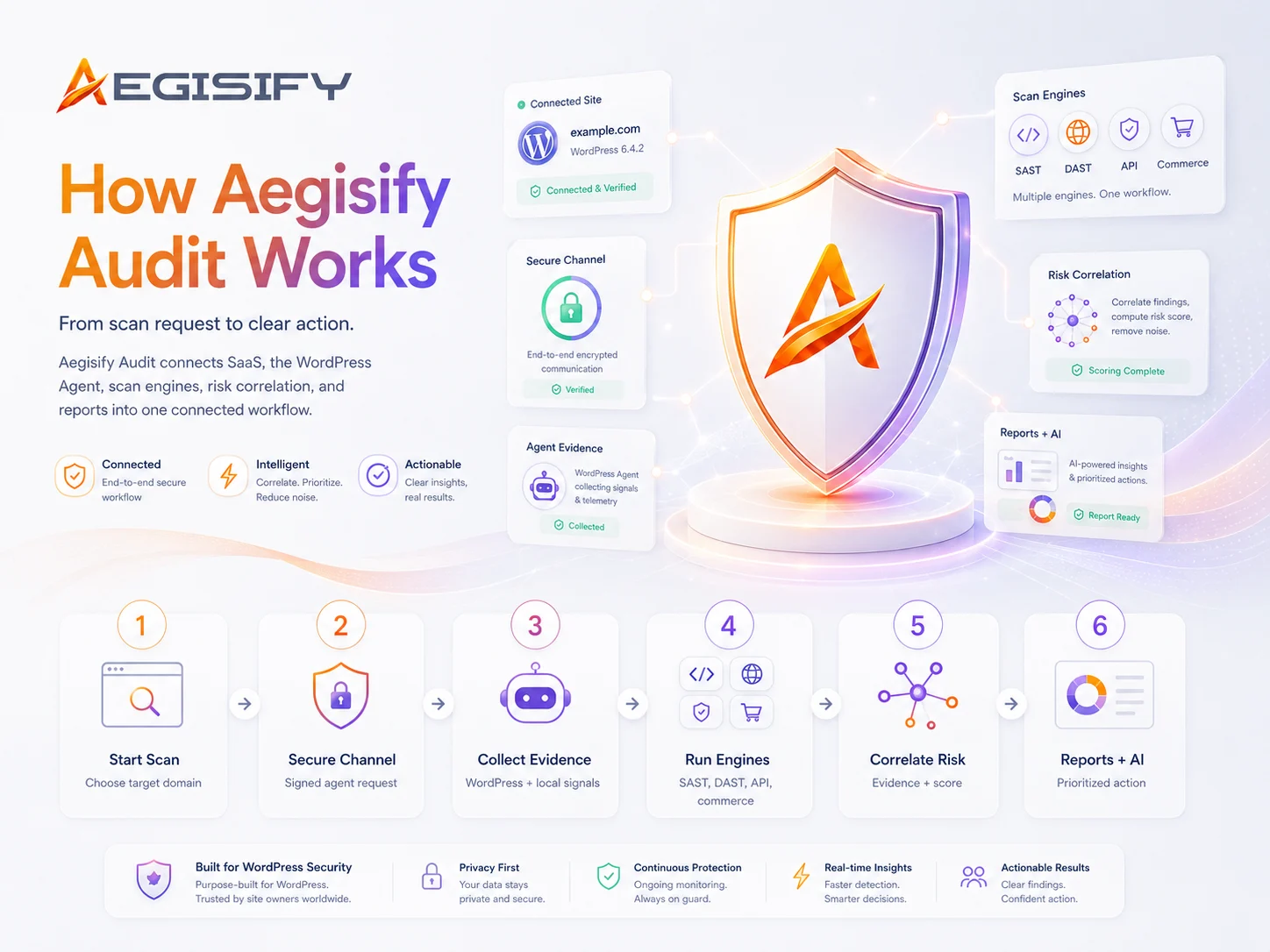
Aegisify Audit combines SaaS-based security intelligence with a WordPress-side Agent. The SaaS platform manages authorized domains, coordinates scans, organizes findings, supports reporting, and brings security evidence into a centralized workflow. The Agent provides deeper visibility into the WordPress environment where external scanning alone may not provide enough context.
This connected architecture helps technical and business teams evaluate both external exposure and internal WordPress signals. Findings can include installed plugins and themes, software versions, dependencies, configuration posture, code-analysis signals, activity events, and optional logs.
For security architects and WordPress experts, this provides stronger technical context. For executives and marketing leaders, it creates a clearer view of which issues may affect website availability, customer trust, search visibility, ecommerce operations, and business continuity.
Security Evidence Aegisify Can Bring Together
| Security Area | What It Helps Your Team Understand |
|---|---|
| SAST-style code review | Surfaces suspicious code patterns, potentially risky functions, unexpected file changes, and plugin or theme code signals that may require technical review. |
| DAST-style exposure checks | Examines externally observable behavior such as HTTP responses, exposed routes, API surfaces, authentication entry points, session behavior, and security headers. |
| Plugin and theme security | Helps teams evaluate installed software, version status, dependency signals, known vulnerabilities, update availability, and components that may deserve immediate attention. |
| WordPress configuration | Provides context around settings, access controls, hardening posture, exposed functionality, and configuration choices that may increase operational or security risk. |
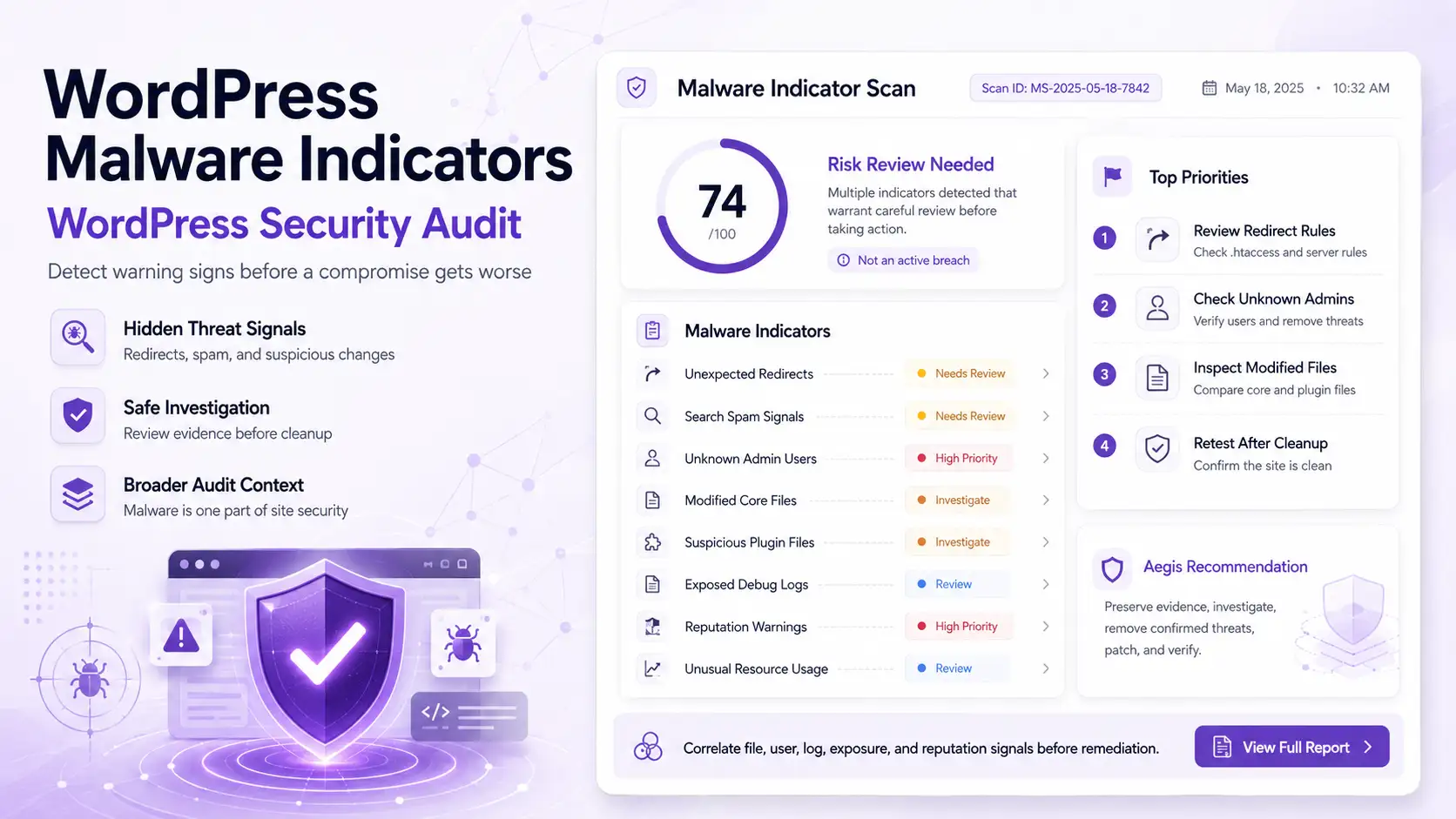
| Activity and diagnostic logs | Adds optional operational context from WordPress activity events and diagnostic signals that may help explain errors, failed operations, administrative changes, or suspicious behavior. |
| AI-assisted analysis | Organizes findings, reduces technical noise, highlights relationships between signals, and helps teams prioritize which risks to investigate first. |
Security Intelligence, Not Security Theater
No single product can make a WordPress website permanently immune to compromise. Effective protection requires multiple layers working together, including timely updates, reliable backups, strong access control, least-privilege administration, firewall protections, monitoring, secure development practices, and informed human review.
Aegisify strengthens this layered approach by helping teams identify risk, connect technical evidence, prioritize findings, and plan the next action. It does not replace sound security governance or the judgment of experienced WordPress and cybersecurity professionals.
Responsible Security Research and Disclosure
Aegisify values responsible security research. Researchers who believe they have identified a vulnerability in an Aegisify product can report the issue through the responsible disclosure process so it can be reviewed and addressed appropriately.
Responsible testing protects customers and the broader WordPress community. Reports must avoid destructive activity, denial-of-service testing, unauthorized access to customer information, privacy violations, data modification, or public disclosure before Aegisify has had a reasonable opportunity to investigate the finding.
Turn WordPress Security Signals Into Clear Action
Aegisify Audit helps WordPress professionals, security teams, marketing leaders, and executives review website exposure, plugin and theme risk, code-analysis findings, externally observed security evidence, configuration posture, optional logs, and AI-assisted recommendations within one organized workflow.
See what matters, understand the potential impact, and give your team a clearer path from security evidence to informed action.