If you care about WordPress, Sitemap, robots.txt, SEO, automated, updates, WooCommerce, Analytics, and indexing, you’re really talking about one thing: building a site that search engines and modern AI systems can reliably understand, crawl, and trust without your team babysitting technical SEO every week.
For marketing executives and business owners, this is not “developer housekeeping.” It’s the infrastructure behind discoverability, revenue, and predictable growth. For WordPress administrators, it’s the difference between clean indexing and months of wasted effort where great pages exist but never truly get seen.
Why WordPress Sitemaps and robots.txt decide whether your SEO wins or stalls
A WordPress Sitemap is not just a “nice to have XML file.” It’s a structured inventory that tells crawlers what exists, where it lives, and when it was last updated so indexing becomes intentional instead of accidental. At the same time, robots.txt is the traffic director. It doesn’t secure your website, but it guides crawlers away from wasteful paths (like internal search results and feed endpoints) and toward what matters.
Here’s the reality: modern SEO isn’t only about ranking pages. It’s about ensuring your content is discoverable and consistently re-crawled as you publish, refresh products, update landing pages, or launch promotions. Search engines and increasingly AI engines reward websites that make their structure easy to parse and their updates easy to detect.
That’s why the best WordPress SEO setups focus on two principles:
-
automation (sitemaps that update themselves and reflect real-time site changes), and
-
clarity (robots rules that guide crawlers without blocking what you want indexed).
The “automated updates” layer: how a sitemap stays accurate without constant manual work
Many sites ship with sitemaps that look correct on day one and gradually become out-of-date or incomplete as the site grows. The real value comes from a system that responds to changes in WordPress itself by publishing posts, editing pages, adding product categories, deleting old content, or updating taxonomy structures.
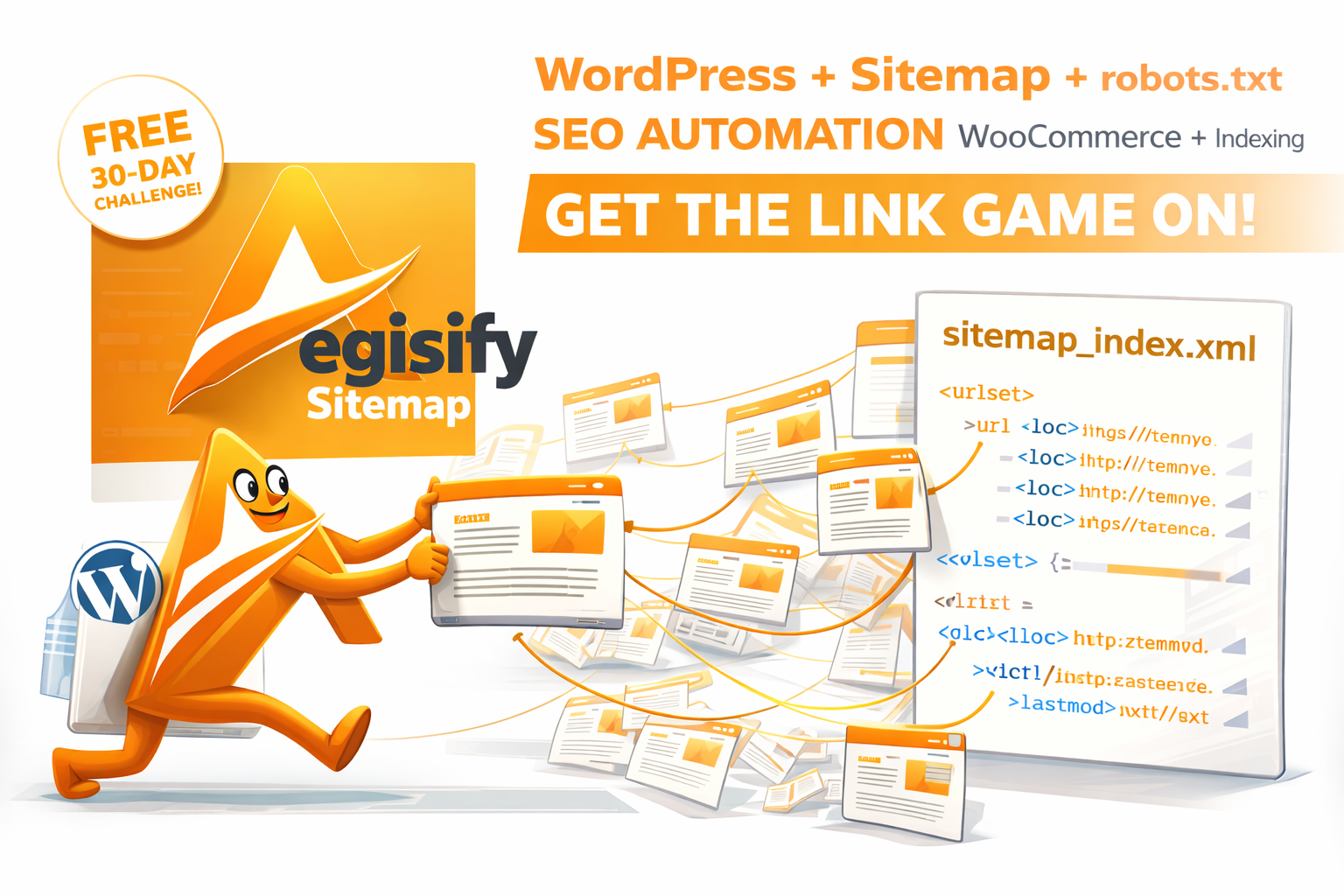
Aegisify Sitemap is built around that operational reality. Instead of treating a sitemap like a static export, it behaves like a live publishing asset:
-
It generates a Sitemap Index at
/sitemap_index.xmland then automatically produces child sitemaps for each enabled post type and taxonomy. -
It supports pagination based on a configurable URL-per-sitemap setting, which is critical for larger sites (and especially WooCommerce stores) where you can easily exceed thousands of URLs.
-
It tracks meaningful changes and bumps an internal cache version so sitemap files can be cached aggressively while still refreshing when content changes an approach that supports performance and accuracy at scale.
For executives, the takeaway is simple: a sitemap should behave like an always-current catalog of what your business is selling and publishing. For admins, it should update without requiring routine “rebuild” tasks.
WooCommerce indexing: why product and category discovery deserves special attention
WooCommerce sites have unique indexing challenges because your revenue is tied to inventory pages, category structures, product tags, and promotional landing pages. A sitemap system must understand that store content isn’t “secondary” to blog content it’s core.
Aegisify Sitemap explicitly supports WooCommerce-style structures by handling post types like product and taxonomies such as product categories and tags. This matters because product catalogs change constantly: you add products, update descriptions, shift categories, run seasonal pages, remove old listings, and change internal linking across collections. An automated sitemap index that reflects these shifts makes crawlers more likely to:
- discover new products quickly,
- understand category hierarchy more reliably,
- and re-crawl updated product pages without delay.
This is one of those behind-the-scenes advantages that marketing teams feel later when campaigns launch and pages index faster, rather than waiting weeks for organic discovery.
robots.txt: guiding crawl budget without accidentally blocking growth
One of the most common SEO mistakes on WordPress is mishandling robots.txt. Some sites leave it untouched, allowing crawlers to waste time on low-value endpoints. Other sites over-tighten rules and unintentionally block critical content or resource paths.
Aegisify Sitemap approaches robots.txt in a pragmatic, SEO-safe way:
-
It can generate robots.txt output directly via WordPress’s robots filter so the output is consistent and controlled.
-
It can optionally write a physical robots.txt file when environments require it (some hosts and setups prefer an actual file).
-
It supports “optimization rules” that reduce crawl waste like limiting internal search result crawling while still preserving critical allowances (for example, ensuring
/wp-admin/admin-ajax.phpremains accessible for legitimate functionality).
Most importantly, it can inject your sitemap declaration directly into robots output. This is a small line with oversized impact: it makes sure crawlers always know where your sitemap index lives, reinforcing discovery and indexing.
For business owners and marketing leaders, robots.txt should be viewed as a performance and clarity tool. When used correctly, it helps search engines spend time on what drives conversions, products, services, category pages, and high-value content, not internal noise.
Analytics and operational insight: measuring what matters in discovery
When teams talk about Analytics, they often jump straight to traffic dashboards. But there’s another layer of analytics that matters earlier in the funnel: crawl efficiency and index coverage. If the wrong URLs are being crawled, or the right ones aren’t being discovered, your marketing metrics will always feel capped.
Aegisify Sitemap includes operational signals like “last ping” tracking, showing that your site is actively notifying search engines when important publishing events occur. That’s not a vanity feature. It’s a trust and responsiveness mechanism that helps your site behave like a living publisher rather than a static brochure. The marketing outcome is speed: faster discovery, faster indexing, faster time-to-impact when campaigns go live.
AI engines and modern indexing: sitemaps aren’t just for Google anymore
The landscape has expanded. indexing is no longer only about classic search. AI-driven systems increasingly rely on structured signals to understand sites especially when content is large, constantly changing, or product-driven. Clear sitemap architecture plus sensible robots rules creates a “high confidence” blueprint for both search engines and AI engines to interpret your content.
That’s why the modern WordPress technical stack should be engineered for:
- stable sitemap endpoints,
- automated updates triggered by real content changes,
- clear crawling guidance through robots.txt,
- and a coherent internal linking structure that reinforces topical authority.
The unified growth platform: Aegisify Sitemap + Aegisify Links + Aegisify SEO
When you combine Aegisify Sitemap, Aegisify Links, and Aegisify SEO, you move beyond “tools” and into a unified marketing infrastructure that helps search engines and AI engines understand, prioritize, and trust your site.
Aegisify Sitemap ensures your site’s structure is always visible and consistently refreshed through automated updates, including WooCommerce products and taxonomies, while reinforcing discovery via robots.txt sitemap declarations and crawl-optimization controls. Aegisify Links turns internal linking into a deliberate marketing lever, connecting campaigns, product funnels, cornerstone pages, and topical clusters so link equity flows where it supports business priorities. Aegisify SEO completes the picture by driving on-page optimization, technical SEO controls, and AI-ready visibility signals so your content is both machine-readable and strategically aligned with how audiences search.
Together, they promote SEO as a system where WordPress structure, Sitemap discovery, robots.txt crawl guidance, automated updates, WooCommerce catalog visibility, actionable Analytics, and confident indexing work in coordination. The result is a unified marketing platform designed to attract and serve modern discovery engines such as Bing, Google, IndexNow, ChatGPT, and other major AI engines so your site is not only searchable, but consistently understood, resurfaced, and prioritized as it evolves.
Aegisify News and Articles
 WordPress Short Links, Smart Linking, SEO, Word Cloud, Bulk Linking, WooCommerce, Analytics & Link Tracking : The Executive Guide to Modern WordPress Growth Gallery
WordPress Short Links, Smart Linking, SEO, Word Cloud, Bulk Linking, WooCommerce, Analytics & Link Tracking : The Executive Guide to Modern WordPress Growth






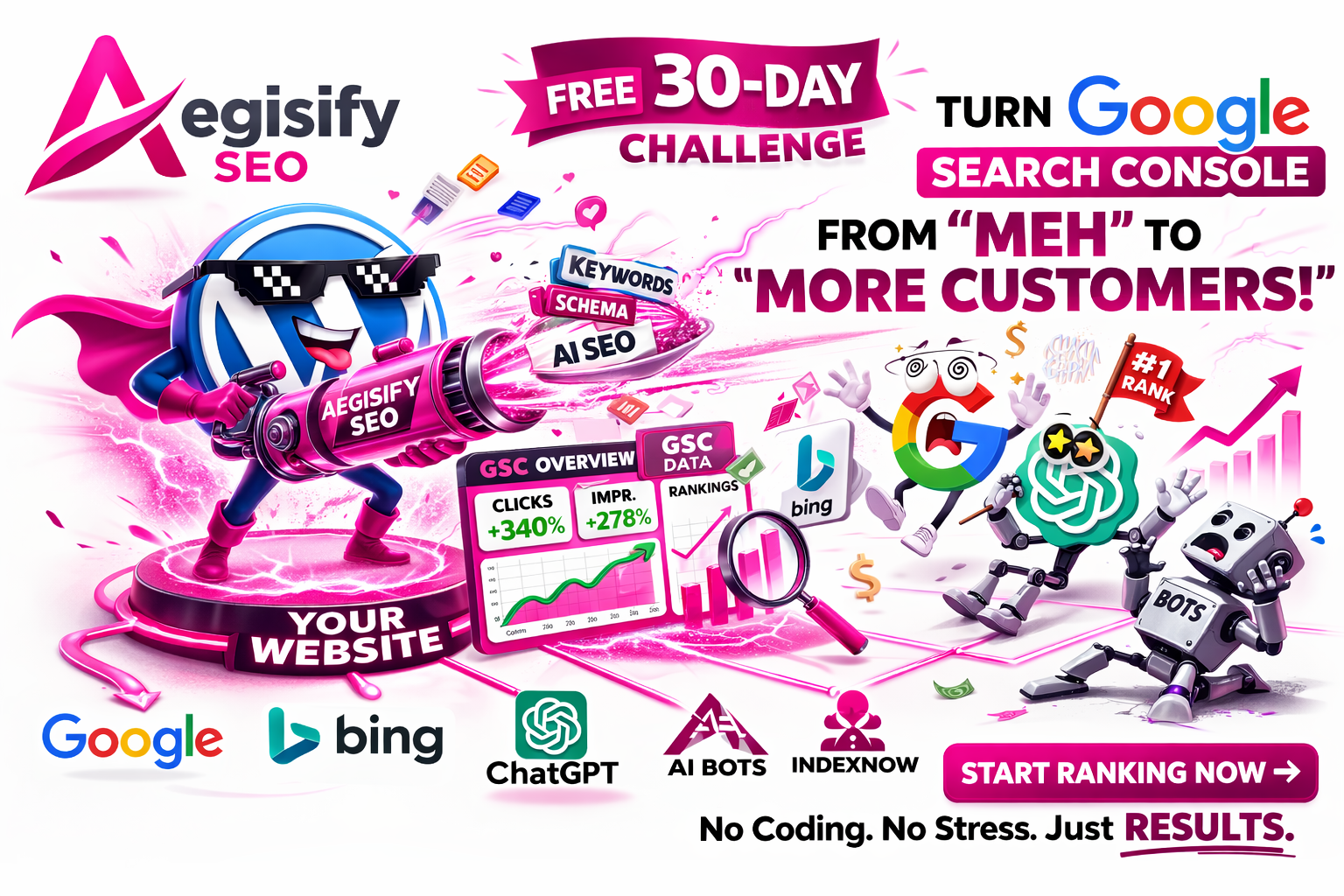 2026 #1 WordPress SEO: AI SEO + Google Search Console (GSC Overview, GSC Schema Intelligence & GSC Search Stats) : Easy to Deploy, Advanced Intelligence Powered by Google Cloud Gallery
2026 #1 WordPress SEO: AI SEO + Google Search Console (GSC Overview, GSC Schema Intelligence & GSC Search Stats) : Easy to Deploy, Advanced Intelligence Powered by Google Cloud
 WordPress API Shield Protection: WordPress API, DDOS, BOT Control, Detailed Logs and Attack Story for Application Security with Web Firewall Access Gallery
WordPress API Shield Protection: WordPress API, DDOS, BOT Control, Detailed Logs and Attack Story for Application Security with Web Firewall Access

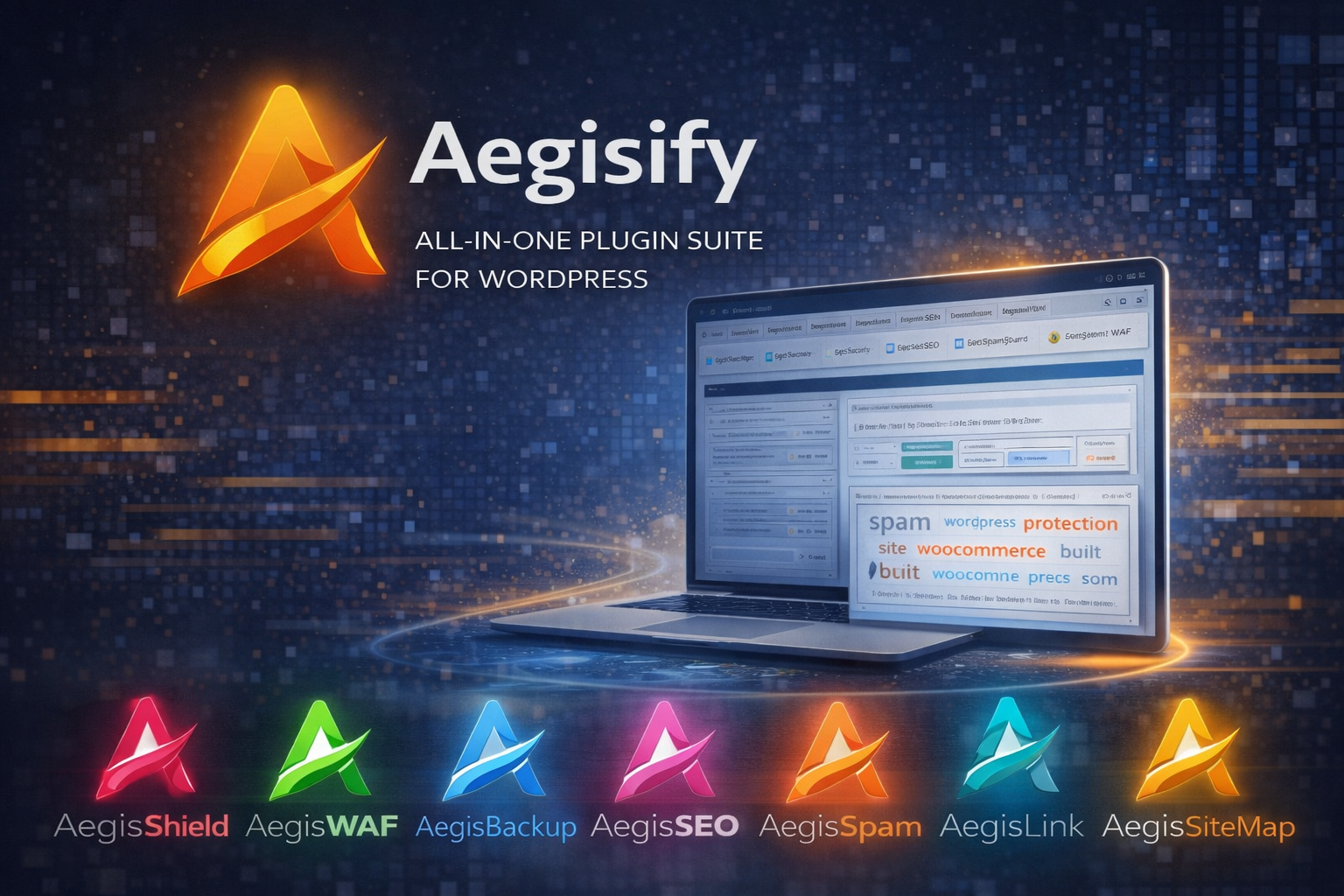



- WordPress Short Links, Smart Linking, SEO, Word Cloud, Bulk Linking, WooCommerce, Analytics & Link Tracking : The Executive Guide to Modern WordPress Growth Gallery
WordPress Short Links, Smart Linking, SEO, Word Cloud, Bulk Linking, WooCommerce, Analytics & Link Tracking : The Executive Guide to Modern WordPress Growth
 2026 #1 WordPress Security Application : WordPress Security, Application Security, Web Application Hardening, Login Guard & File Integrity Unified Gallery
2026 #1 WordPress Security Application : WordPress Security, Application Security, Web Application Hardening, Login Guard & File Integrity Unified