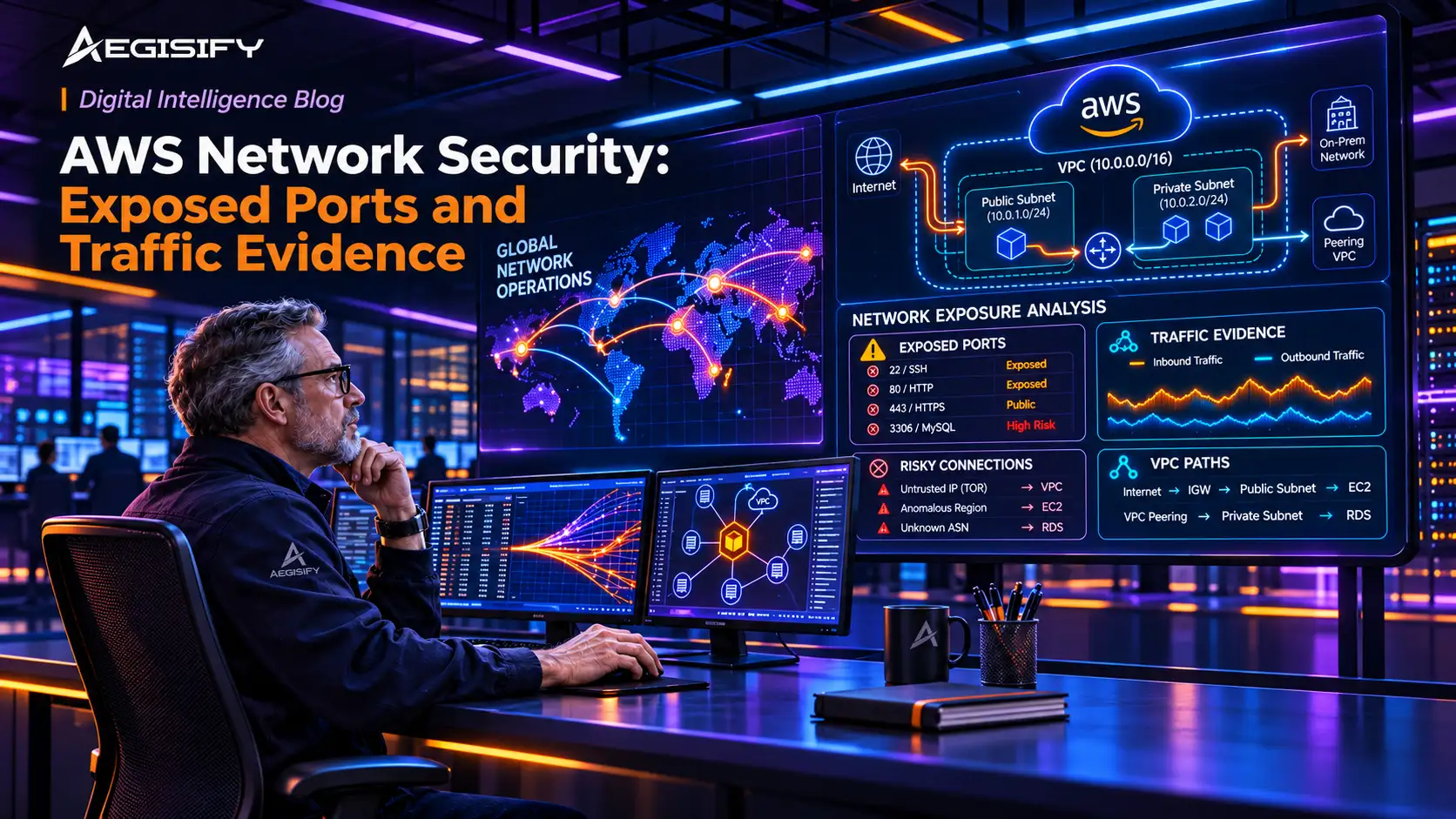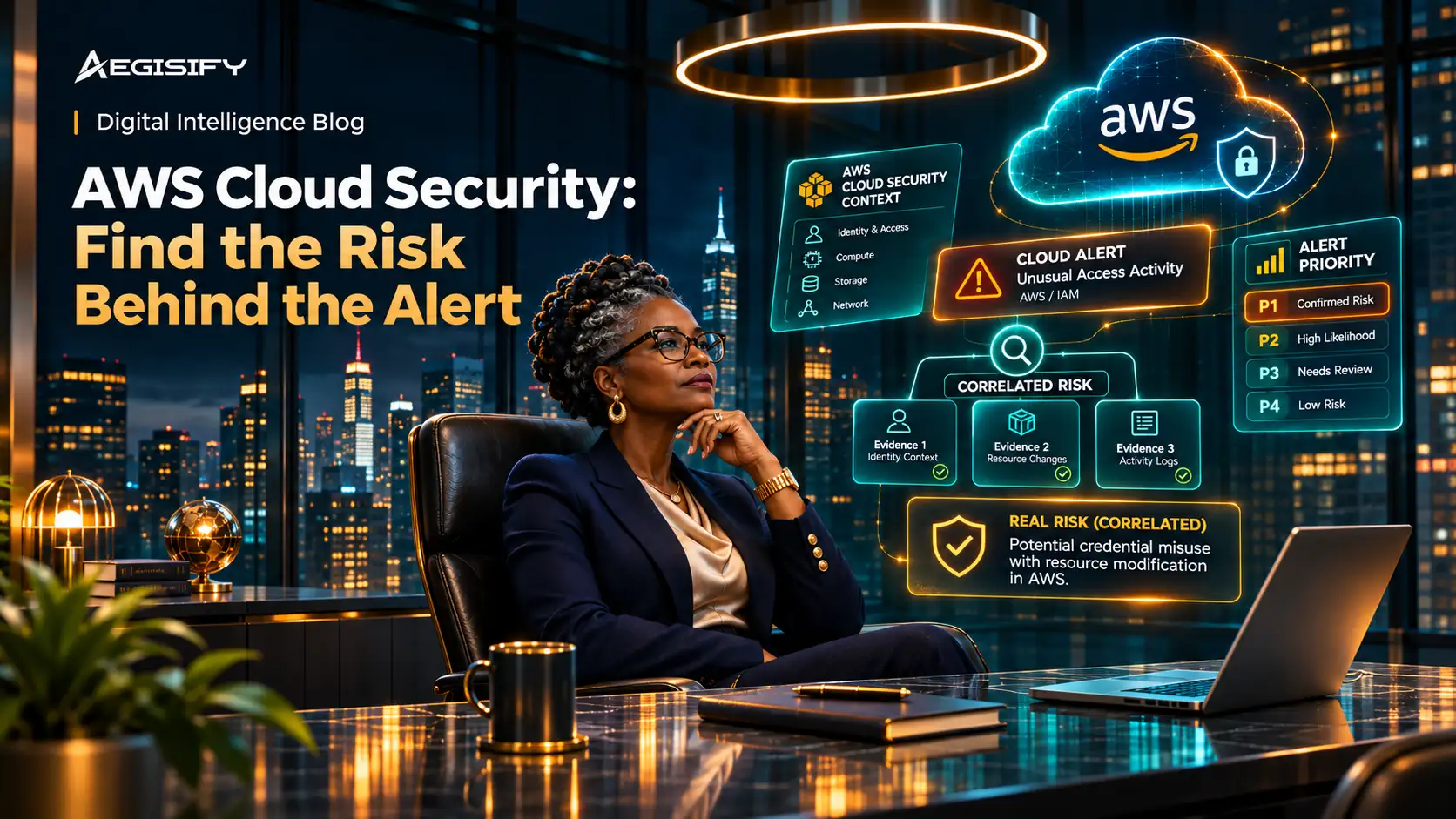
AWS Cloud Security: Find the Risk Behind the Alert
An AWS security finding tells you something deserves attention. It rarely tells you whether the issue threatens a business-critical system, which account owns it, or what your team should do first.
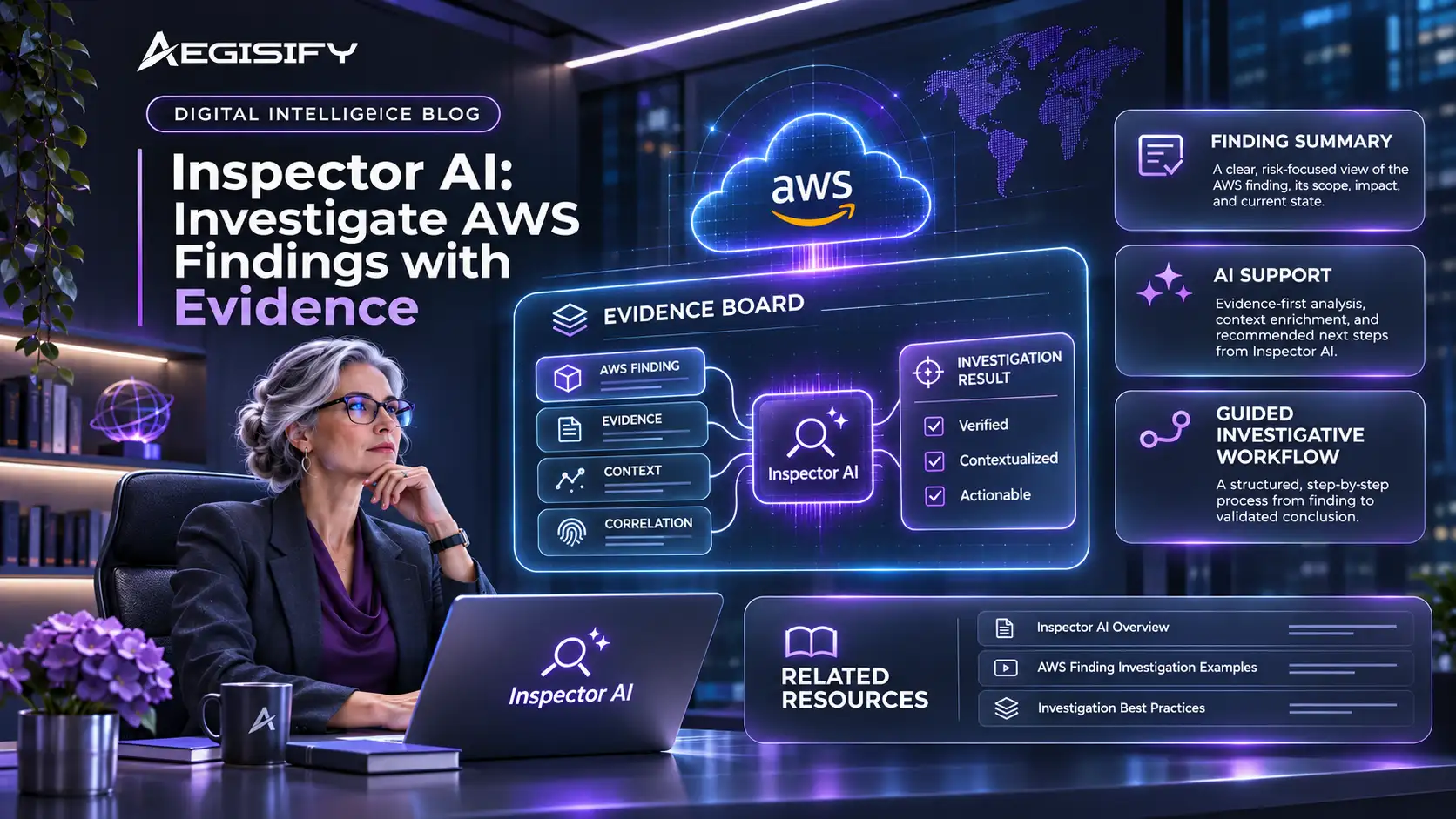
Start with the original AWS finding, verify the affected account and resource, examine available exposure and change context, and prioritize an owner and next action. Digital Intelligence helps bring those observations into one investigation workflow.
Retain provider, finding ID, reported severity and observation time.
Compare authorized account, Region, asset and relevant drift.
Distinguish actual records from denied, partial or stale collection.
Assign investigation and validate the change in AWS.
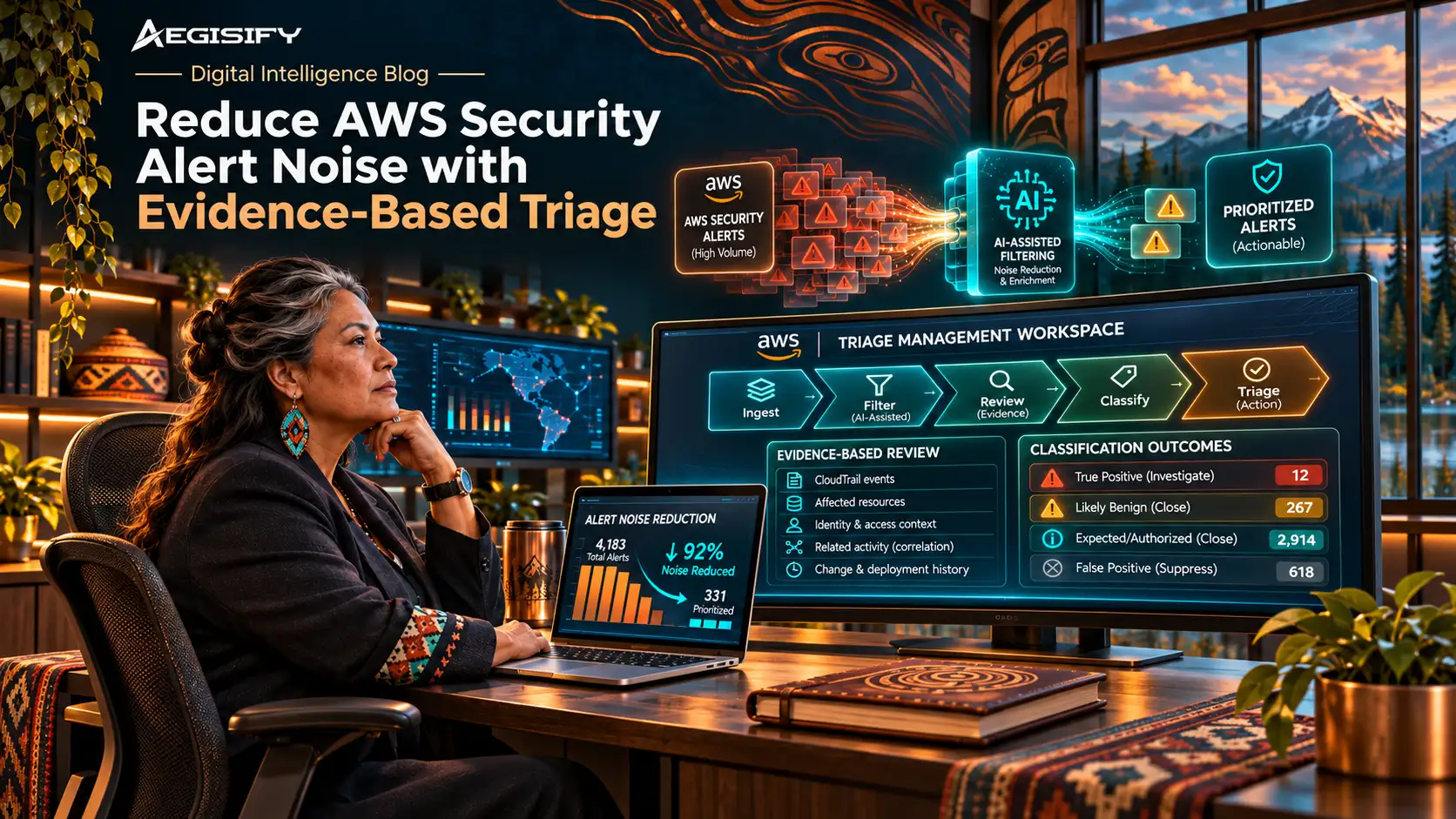
The problem is not a shortage of alerts
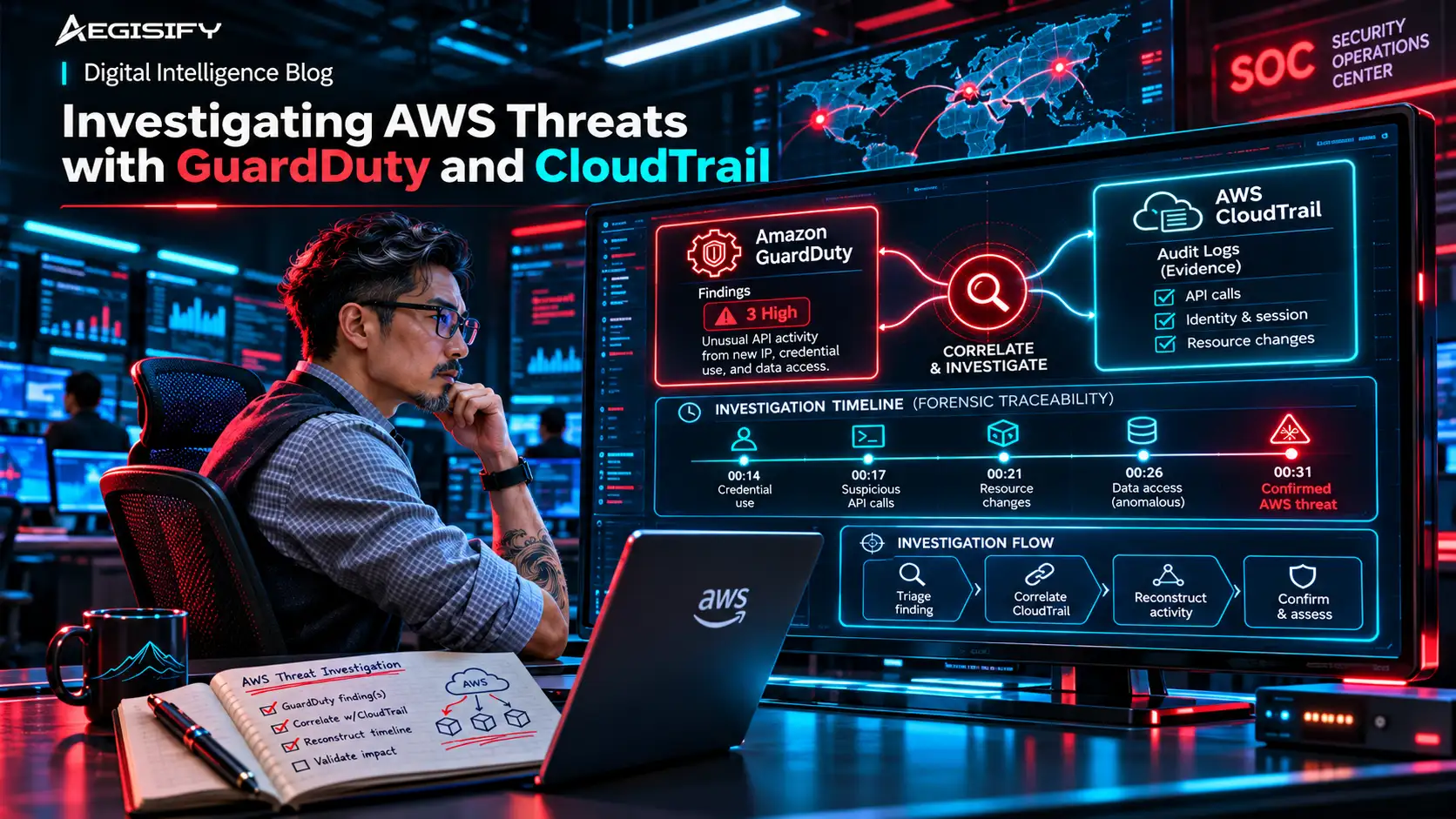
Amazon GuardDuty, AWS Security Hub CSPM, Amazon Inspector and Amazon Macie can each surface valuable security evidence. An executive or analyst still needs to separate source-reported severity from configuration risk, business exposure and actual incident evidence.
A high-severity vulnerability on an isolated test resource may need a different response from a publicly reachable production service. Conversely, a risky security group rule does not by itself prove internet reachability or an active compromise.
Example: two findings, one investigation queue
Suppose an AWS account shows an Inspector vulnerability and another account has an unrestricted SSH security group rule. The first has a provider finding; the second is a configuration observation. A responsible review preserves that distinction while checking ownership, resource role, reachability evidence and remediation urgency.
How Digital Intelligence turns a finding into a decision
- Correlate within scope
Open Security Intelligence or Security Findings for an authorized account and Region; follow the source reference instead of relying on a headline alone.
- Check the evidence boundary
Review provider severity, resource details, source health and any observed change. Unknown is not the same as safe.
- Recommend and verify
Use the supported investigation and ticket workflow to document a recommended AWS-side fix, then refresh the evidence after the owner acts.
Questions security teams ask
Does Digital Intelligence replace GuardDuty or Security Hub?
No. It uses authorized AWS-native findings and contextual observations to support investigation. Those AWS services remain the source of truth for their own detections.
Can it rank every resource by actual attack risk?
No. Available severity, exposure and change evidence can improve prioritization, but missing reachability or business context must remain unknown.
Can Digital Intelligence automatically remediate a finding?
The normal AWS observation workflow is read-only. A team reviews the guidance, makes approved changes in AWS and verifies the result.
Technical reference: AWS Security Hub CSPM integrations (AWS official documentation). Actual findings, permissions and service support are environment-dependent.