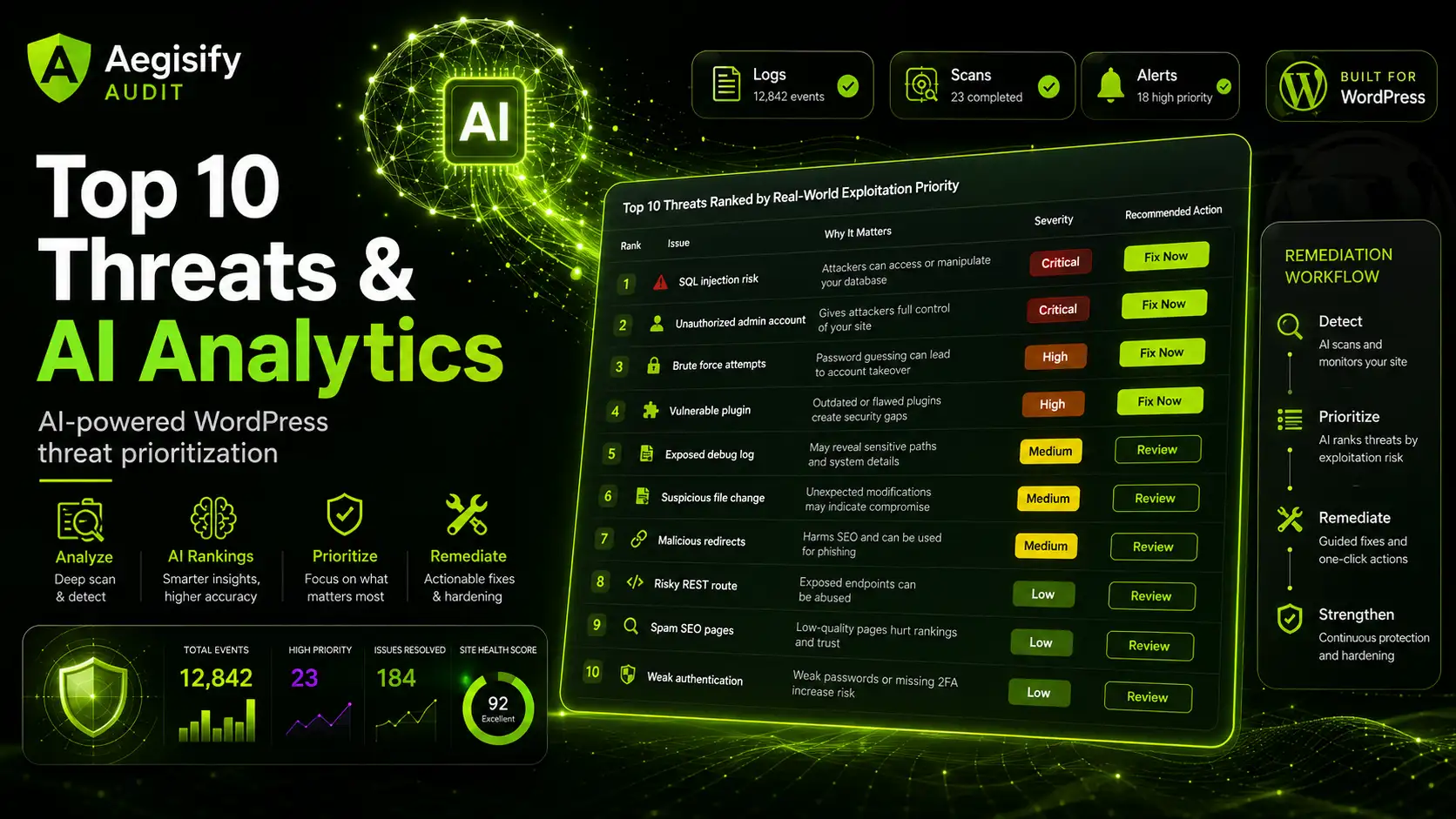
Aegisify Security: Top 10 Threats and AI Analytics
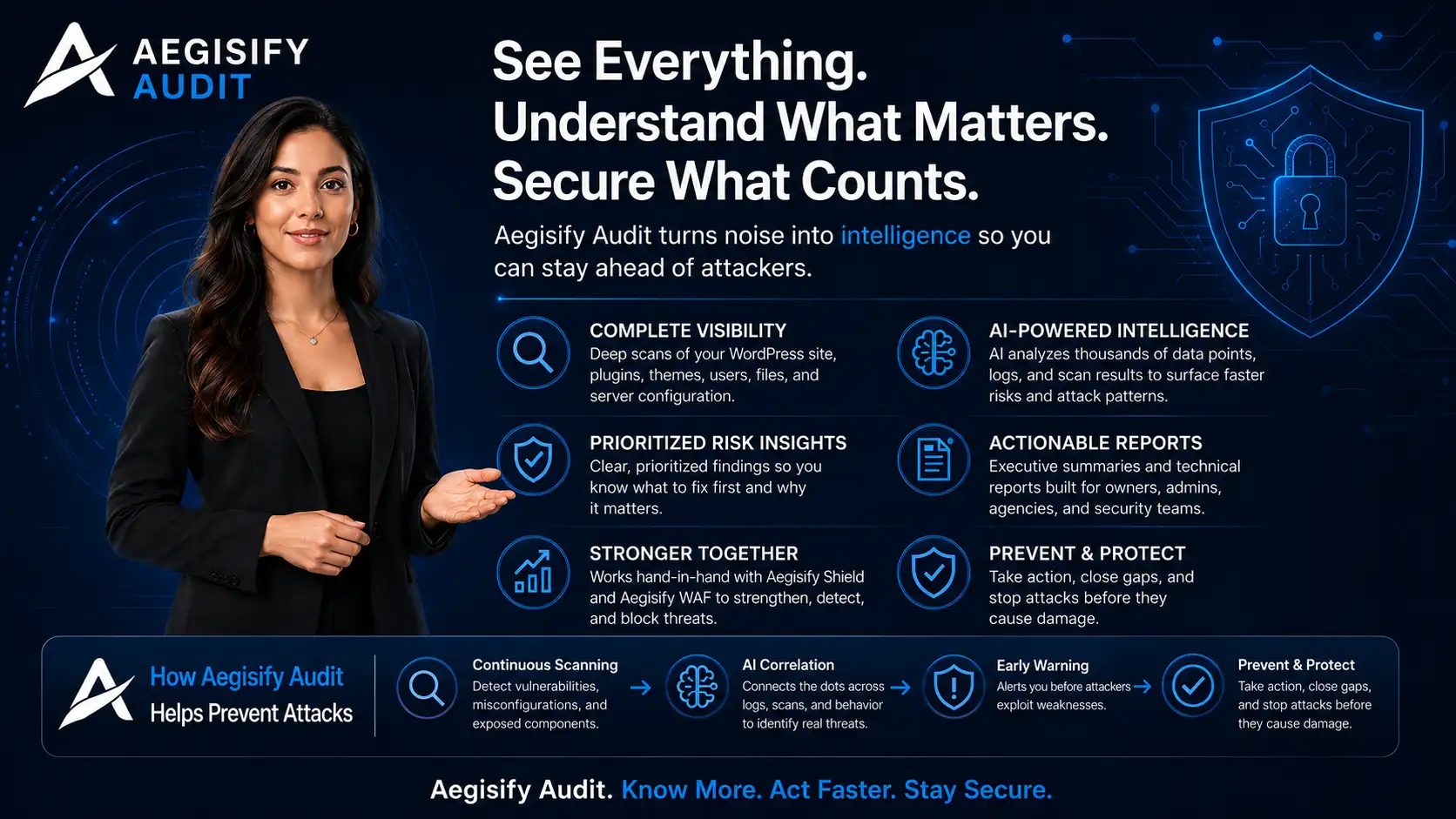
WordPress security teams do not need more alerts. They need a clear view of which vulnerabilities, application findings, activity events, runtime errors, and attack signals require attention first.
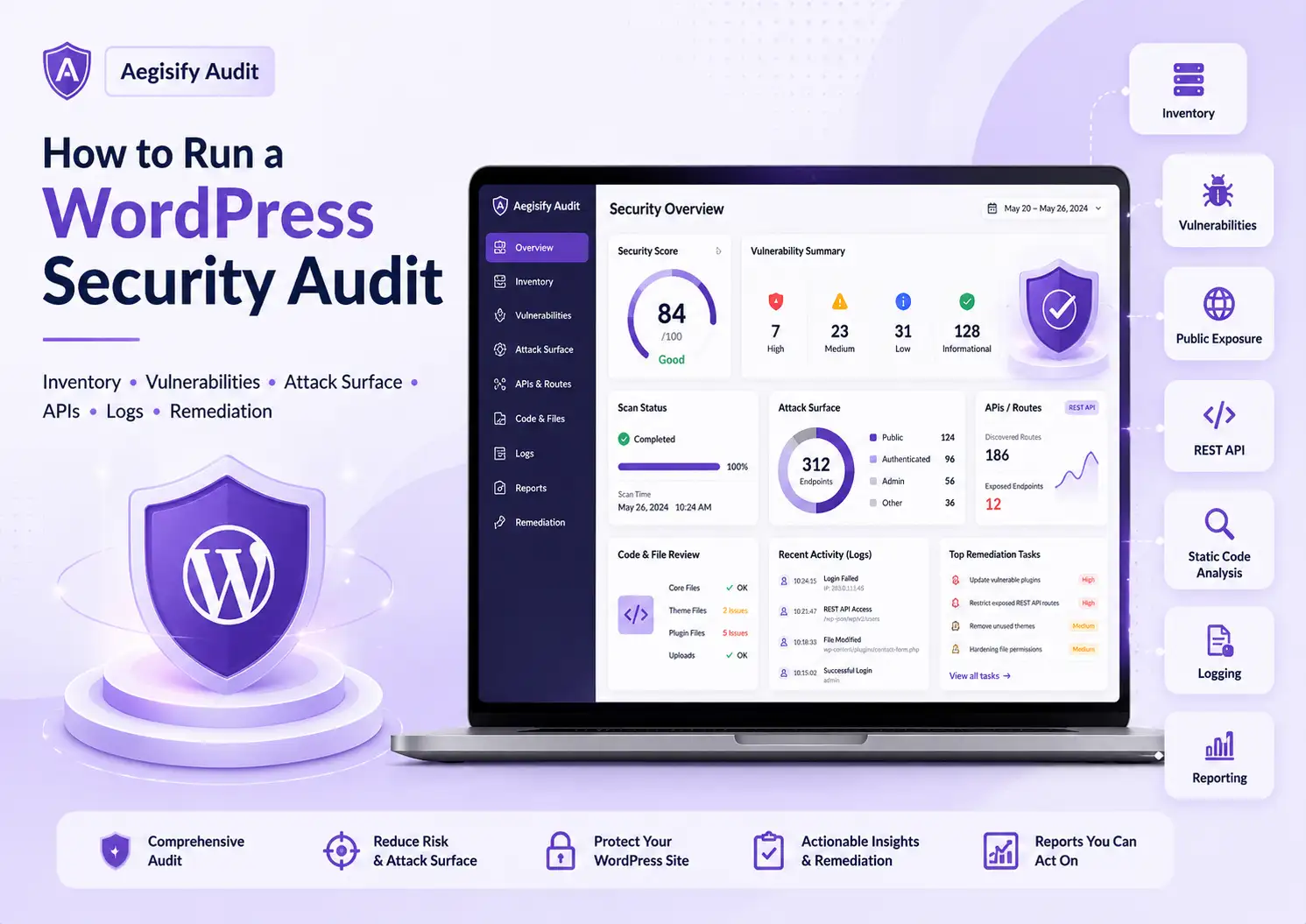
Aegisify Audit combines evidence from the WordPress Agent, Aegisify Shield, Aegisify WAF, security scans, logs, and threat intelligence. Aegisify AI then correlates that evidence into a focused Top 10 Threats report with practical remediation guidance.
| Why WordPress Security Teams Need Prioritization | |
|---|---|
| Too Many Signals | Vulnerabilities, code findings, dynamic scan results, WAF events, activity logs, and runtime errors can appear at the same time. |
| Disconnected Evidence | Traditional tools often separate software risk, traffic, application errors, and WordPress changes into different dashboards. |
| Unequal Risk | A severe-sounding alert may be less urgent than a repeated weakness supported by active attack traffic and recent site changes. |
| Business Context | Teams need to know which findings may affect access, uptime, customer trust, ecommerce operations, or sensitive information. |
| Evidence Used by Aegisify Security | |
|---|---|
| Aegisify Audit | Vulnerability findings, static code analysis, DAST observations, API discovery, configuration review, and domain-risk context. |
| WordPress Agent | Local software inventory, site changes, configuration drift, activity events, and approved runtime evidence. |
| Aegisify Shield | Login activity, privileged-user events, file-integrity changes, hardening signals, and important WordPress actions. |
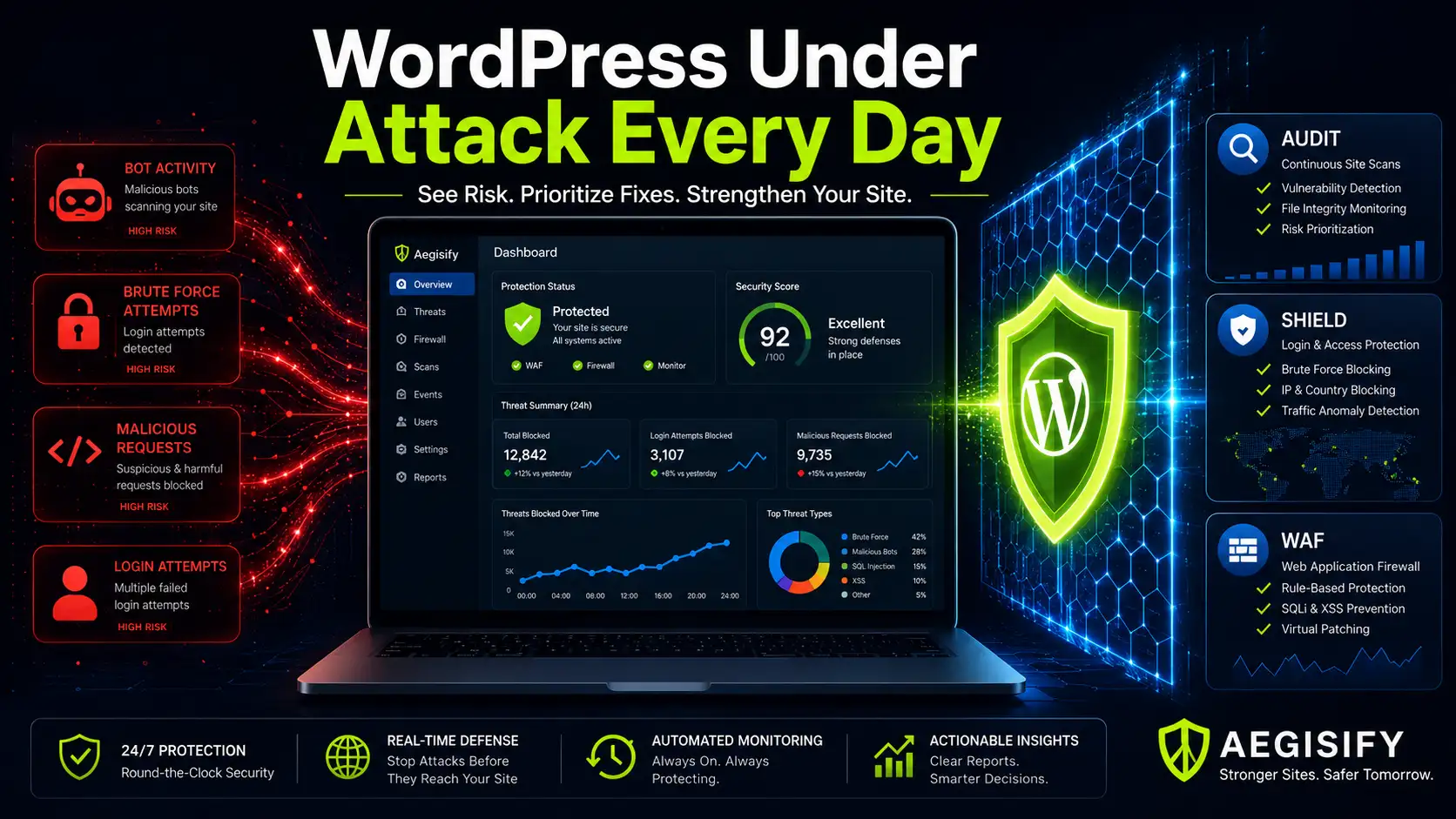
| Aegisify WAF | Blocked requests, attack patterns, targeted routes, API pressure, malicious payloads, bot activity, and repeated source behavior. |
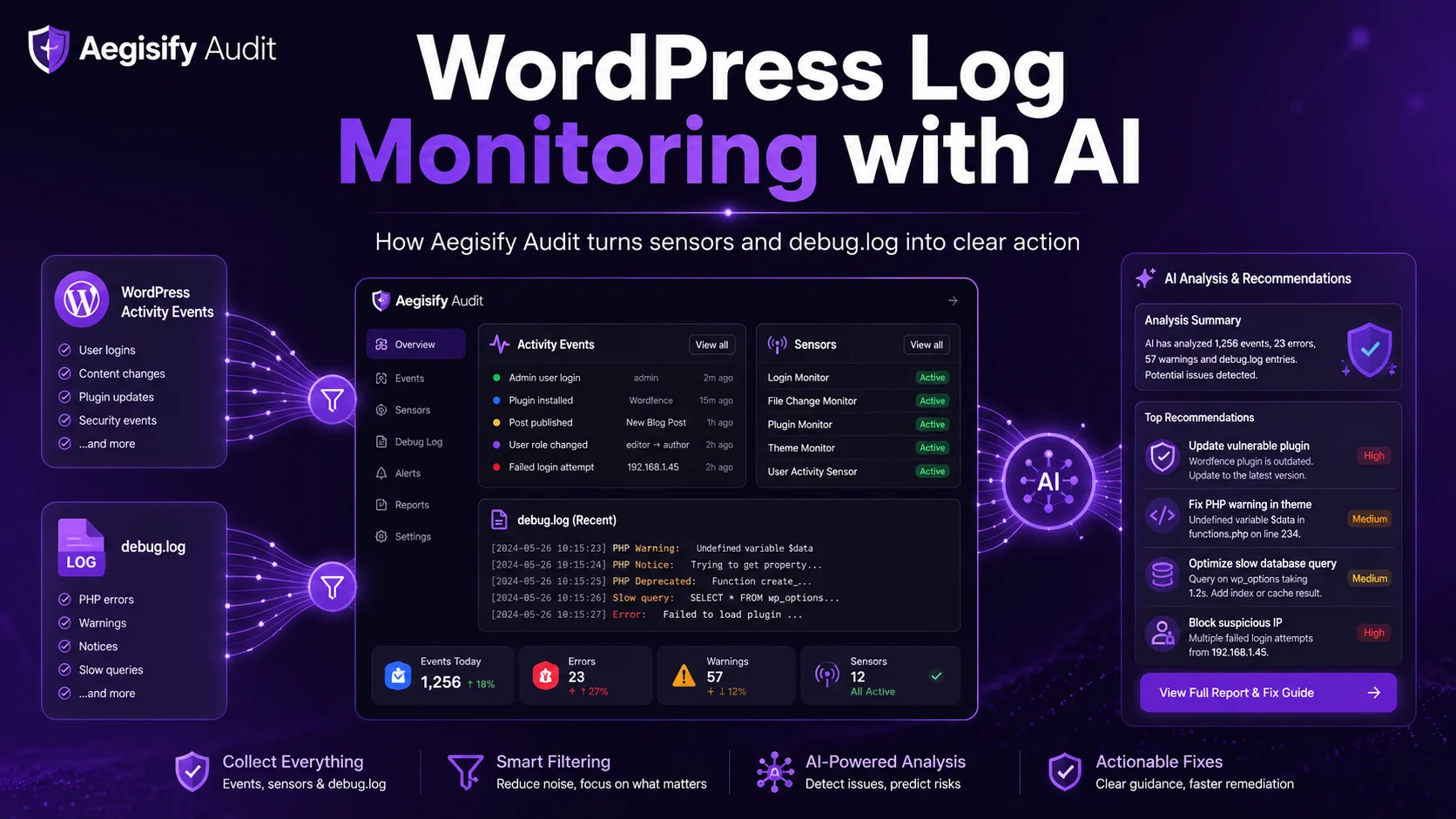
| debug.log | Approved PHP errors, warnings, notices, plugin conflicts, and runtime failures that may support a larger threat pattern. |
| Threat Intelligence | Available vulnerability, exploitation, blacklist, reputation, and public compromise context. |
| WordPress Activity Events That Add Context | |
|---|---|
| Software Changes | Plugin installation, activation, update, deletion, theme changes, and must-use plugin activity. |
| Authentication | Successful logins, failed logins, password resets, user changes, and privileged-account activity. |
| Files and Settings | File edits, configuration changes, media uploads, role changes, and other administrative actions. |
| Content Activity | Posts, comments, deletions, updates, and other events that may help build an investigation timeline. |
How Aegisify AI Builds the Top 10 Threats
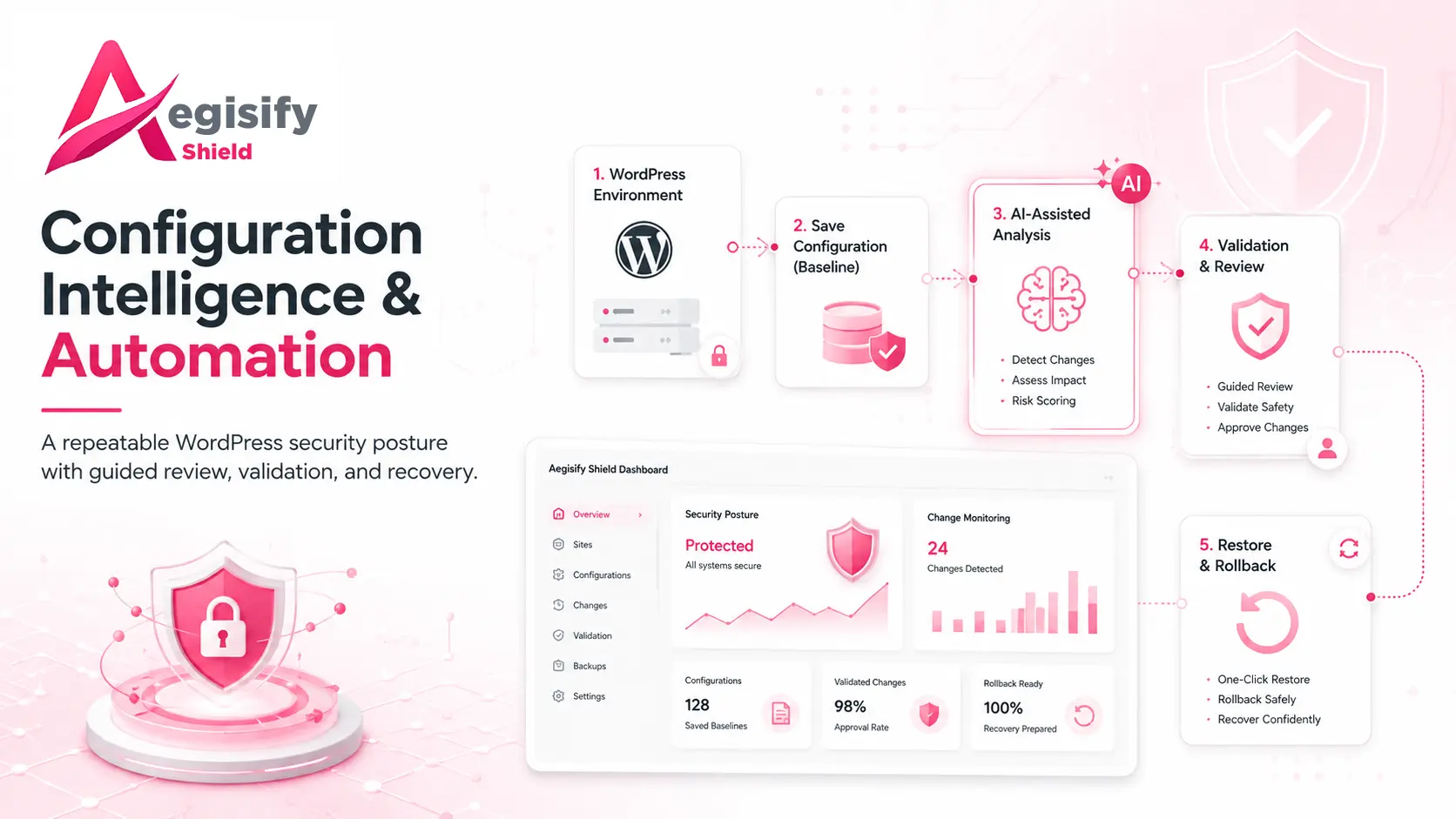
Aegisify AI reviews the available security payload as one connected body of evidence rather than processing isolated alerts.
| From Raw Findings to Clear Security Decisions | |
|---|---|
| Investigate First | Identify the threats with the strongest evidence, exposure, and potential business impact. |
| Connect the Evidence | Show which findings are supported by scans, WAF activity, WordPress changes, runtime errors, or multiple sources. |
| Reduce Risk Faster | Focus remediation on actions most likely to reduce meaningful WordPress security exposure. |
| Require Human Review | Keep remediation accountable through administrator, developer, agency, or security-team validation. |
| Verify the Result | Retest the website and compare findings to confirm that the remediation worked. |
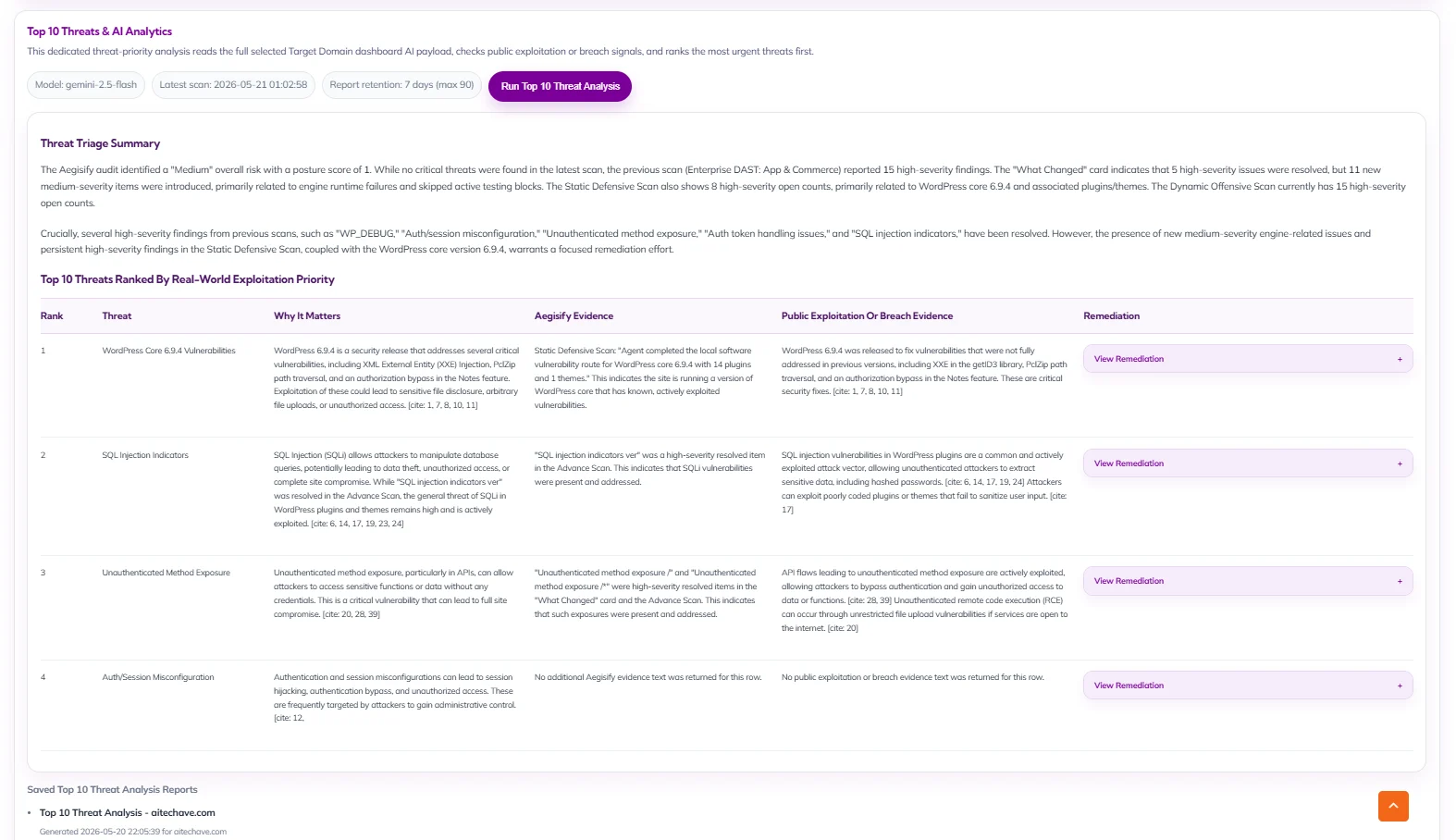
What the Top 10 Threats & AI Analytics Report Shows
Aegisify Security combines Audit findings, Shield activity, WAF evidence, WordPress logs, and AI threat analysis.
| Ranked Threats | The most important WordPress risks ranked by severity, evidence, exploitability, and business impact. |
|---|---|
| Supporting Evidence | Vulnerability scans, SAST, DAST, WAF events, activity logs, debug.log findings, and site changes. |
| Public Risk Context | Available evidence connecting serious weaknesses to known exploitation, compromise, or breach activity. |
| Remediation Priorities | Practical next steps, verification checks, and a clearer order for WordPress security remediation. |
| Human Review | Site-specific findings that remain subject to administrator, developer, agency, or security-team validation. |
From Detection to Action
Aegisify Audit, Aegisify Shield, and Aegisify WAF connect WordPress security evidence to answer one question: What matters most, and what should be fixed next?
Turn WordPress Security Noise Into Clear Priorities
Review your Top 10 threats with site-specific evidence and human-reviewable remediation guidance.
Start Aegisify Security →