WordPress Sitemap and Robots.txt SEO That Stays Automated
A WordPress sitemap, robots.txt manager, automated sitemap updates, WooCommerce discovery, SEO analytics, IndexNow notifications and indexing controls form the technical foundation that helps search engines understand a growing website. When these systems are incomplete, outdated or misconfigured, valuable pages can remain difficult to discover while crawlers spend time on duplicate archives, filter combinations and low-value URLs.
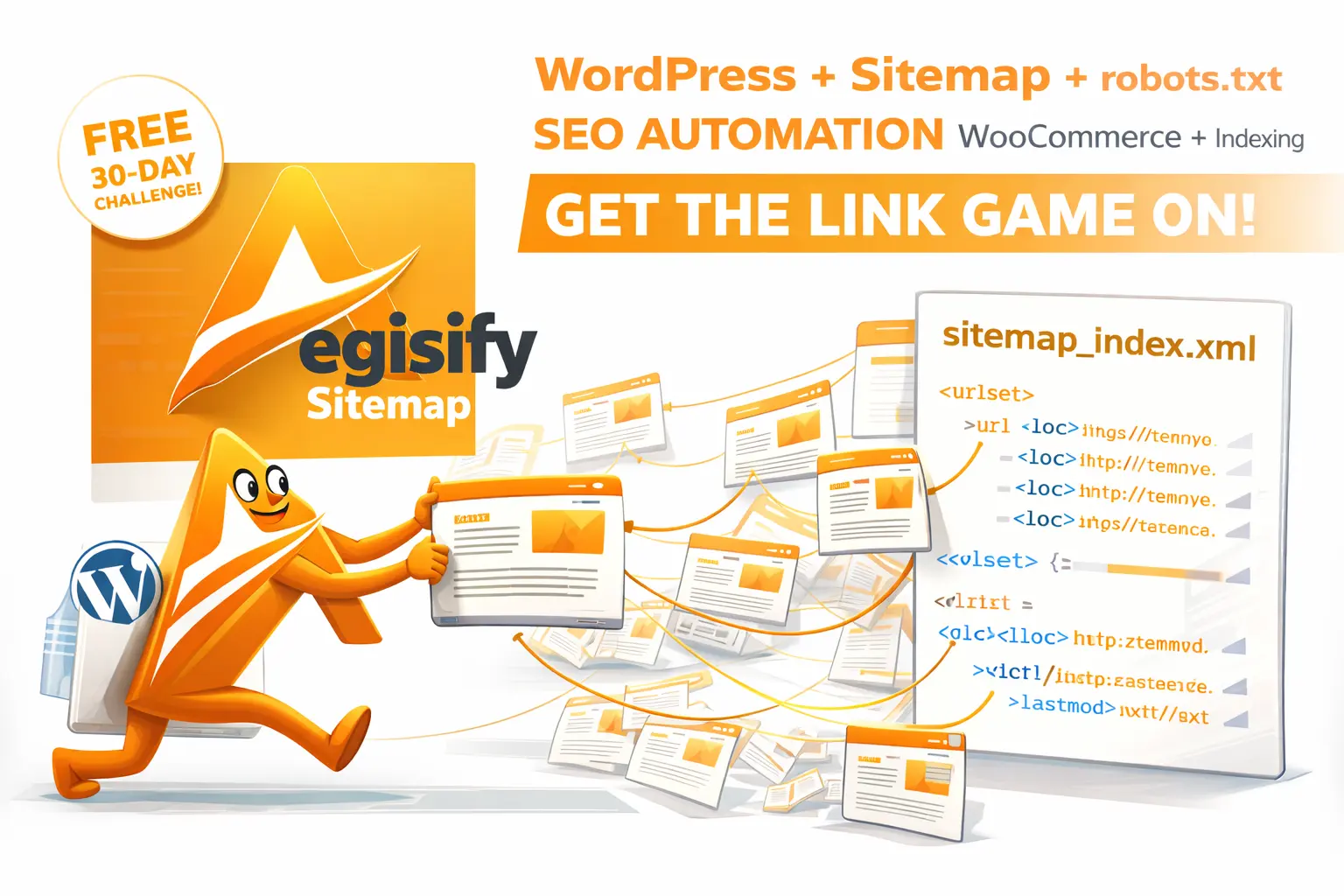
Aegisify SiteMap turns those disconnected tasks into a managed WordPress discovery workflow. It helps administrators organize preferred public URLs, publish XML sitemap indexes and child sitemaps, review crawler rules, support WooCommerce content, identify crawl waste, notify participating search engines and verify that critical endpoints remain healthy.
Why Sitemap and Robots.txt Decisions Affect Revenue
Technical discovery is not developer housekeeping. A product page that is never found cannot attract organic demand. Incorrect crawler rules and outdated sitemaps can also create problems after migrations, product retirements or URL changes.
Google describes a sitemap as a file that identifies important pages and files and can communicate details such as meaningful modification dates. It can improve discovery for large, new, complex or media-rich sites, but it does not guarantee crawling or indexing. The business objective is therefore not “submit everything.” It is to maintain a reliable inventory of the public URLs the organization actually wants discovered.
From WordPress Update to Search Discovery
A post, page, product or taxonomy is published, updated or removed.
The relevant sitemap and cache state reflect the meaningful change.
Robots rules and exclusions continue to match the approved discovery policy.
Eligible changes can be sent through IndexNow and supported channels.
Administrators review endpoints, logs and webmaster evidence.
XML Sitemap Indexes
Organize public content into a sitemap index with child files for enabled post types and taxonomies. Splitting larger inventories keeps output manageable and easier to troubleshoot.
Automated Refresh
Respond to meaningful WordPress content changes while preserving cache efficiency. Accurate refresh behavior reduces the need for manual rebuild routines.
Robots.txt Governance
Preview and manage virtual or physical robots.txt output, sitemap declarations, crawler policies and targeted exclusions from a controlled interface.
WooCommerce Awareness
Review products, product categories, tags, media and filter-driven URL patterns without assuming every generated store variation belongs in search.
Automated Updates Keep the Sitemap Aligned With WordPress
A sitemap is most useful when it reflects the site that exists now. WordPress environments change continuously as teams publish articles, revise services, create products, reorganize categories, remove expired offers and migrate URLs. A static export becomes less trustworthy with every change.
Aegisify SiteMap treats discovery as a live publishing function. It can generate an XML index and child sitemaps, manage public content types, apply exclusions and refresh cached output after meaningful changes. Optional image, video, news and HTML sitemap views extend discovery where useful.
The important signal is accuracy, especially for lastmod. A modification date should represent a meaningful page change rather than being replaced with the current time on every request. Reliable dates help crawlers understand which URLs may deserve renewed attention.
Robots.txt Directs Crawlers; It Does Not Secure WordPress
Google states that robots.txt is mainly used to manage crawler access and request traffic. It is not a dependable method for keeping a page out of search, and a blocked URL can still appear when other pages link to it. Confidential content requires authentication, authorization, server protection or another control that matches the security objective.
Aegisify SiteMap supports virtual robots.txt output and physical-file management where required. Physical mode needs backup, ownership and change control because an existing file may be replaced or become stale.
| Area | SEO Objective | Operational Check |
|---|---|---|
| Public pages | Allow crawlers to access canonical pages, content and required resources. | Confirm important pages are not blocked by robots.txt, authentication, CDN rules or a WAF. |
| Internal search | Reduce low-value result variations when they do not belong in the index. | Review business use before applying broad patterns that may match legitimate URLs. |
| WooCommerce filters | Limit uncontrolled combinations while preserving useful categories and product discovery. | Compare filter URLs with canonicals, internal links, analytics and Search Console evidence. |
| Private resources | Prevent unauthorized access with real security controls. | Use identity, authorization and server protection rather than relying on crawler instructions. |
WooCommerce Sitemaps Need Catalog-Aware Governance
Store discovery changes more quickly than most brochure sites. Products are added, inventory is retired, category structures change, seasonal pages appear and filters create many possible URL combinations. The sitemap should surface useful product and category destinations while avoiding internal templates, empty archives and redundant variants.
Aegisify SiteMap gives administrators visibility into public post types, taxonomies, products, media and exclusions. Teams can include useful product pages and differentiated category archives while keeping canonical URLs consistent.
For larger stores, child sitemaps help teams isolate product, category or media problems instead of treating the catalog as one XML file.
Move From Sitemap Generation to Discovery Control
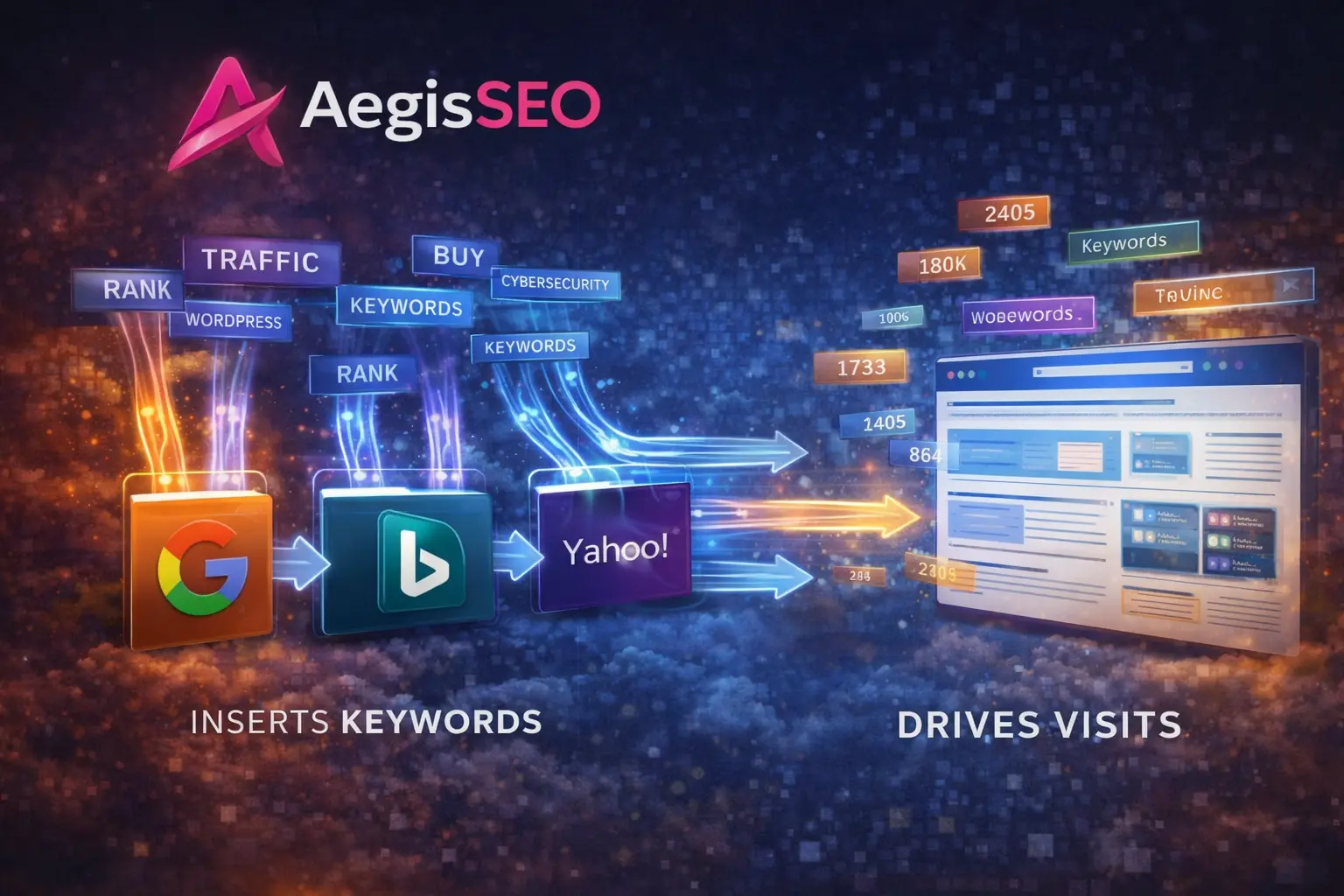
Inventory public content, review crawler rules, automate refreshes, notify supported engines and verify the result.
IndexNow Adds Change Notification, Not an Indexing Guarantee
IndexNow lets a website notify participating search engines when a URL is added, updated or deleted. Its official guidance recommends using IndexNow for recent changes and accurate sitemap modification dates for older content. A successful notification tells participating systems what changed; each engine still decides whether and when to crawl or index the URL.
Aegisify SiteMap connects IndexNow configuration with WordPress publishing activity and status. Teams should validate the key, endpoint response and webmaster evidence instead of treating a successful request as proof of indexing. Support Google through crawlable links, accurate sitemaps and Search Console.
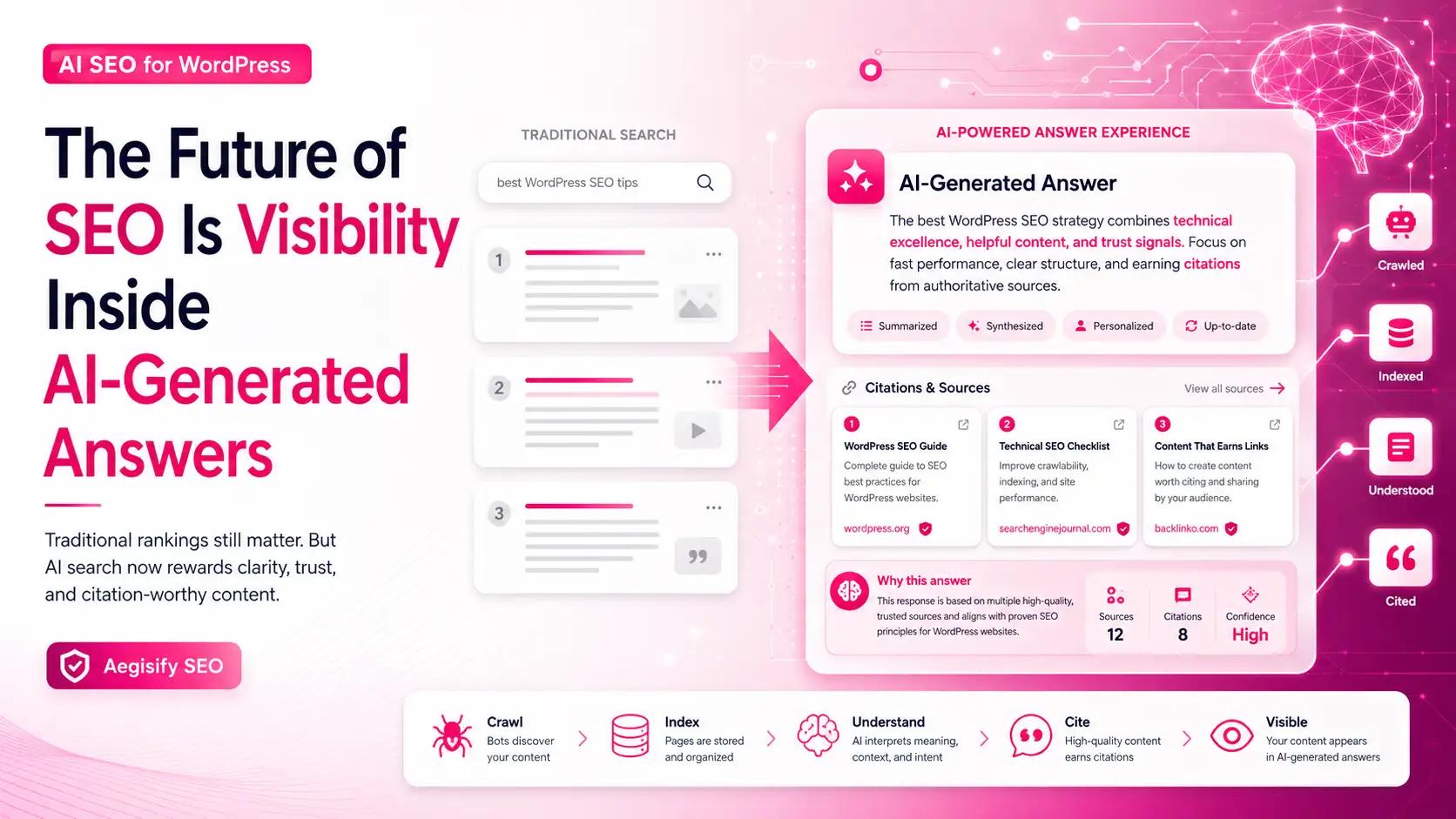
AI Discovery Still Depends on Strong SEO Foundations
Google says its AI features use the same foundational SEO practices as traditional Search. Supporting pages must be indexed and eligible for normal snippets, and Google recommends crawl access, strong internal links, textual content and structured data that matches the visible page.
Other platforms publish their own crawler controls. OpenAI documents OAI-SearchBot for ChatGPT search separately from GPTBot for potential model-training use. This allows a site owner to make independent search-discovery and training-policy decisions in robots.txt.
Aegisify SiteMap helps administrators review search and AI crawler policies and manage supplemental discovery files. No sitemap, crawler rule or AI-oriented file guarantees selection, citation or recommendation.
Aegisify SiteMap, Links and SEO Work Better as One System
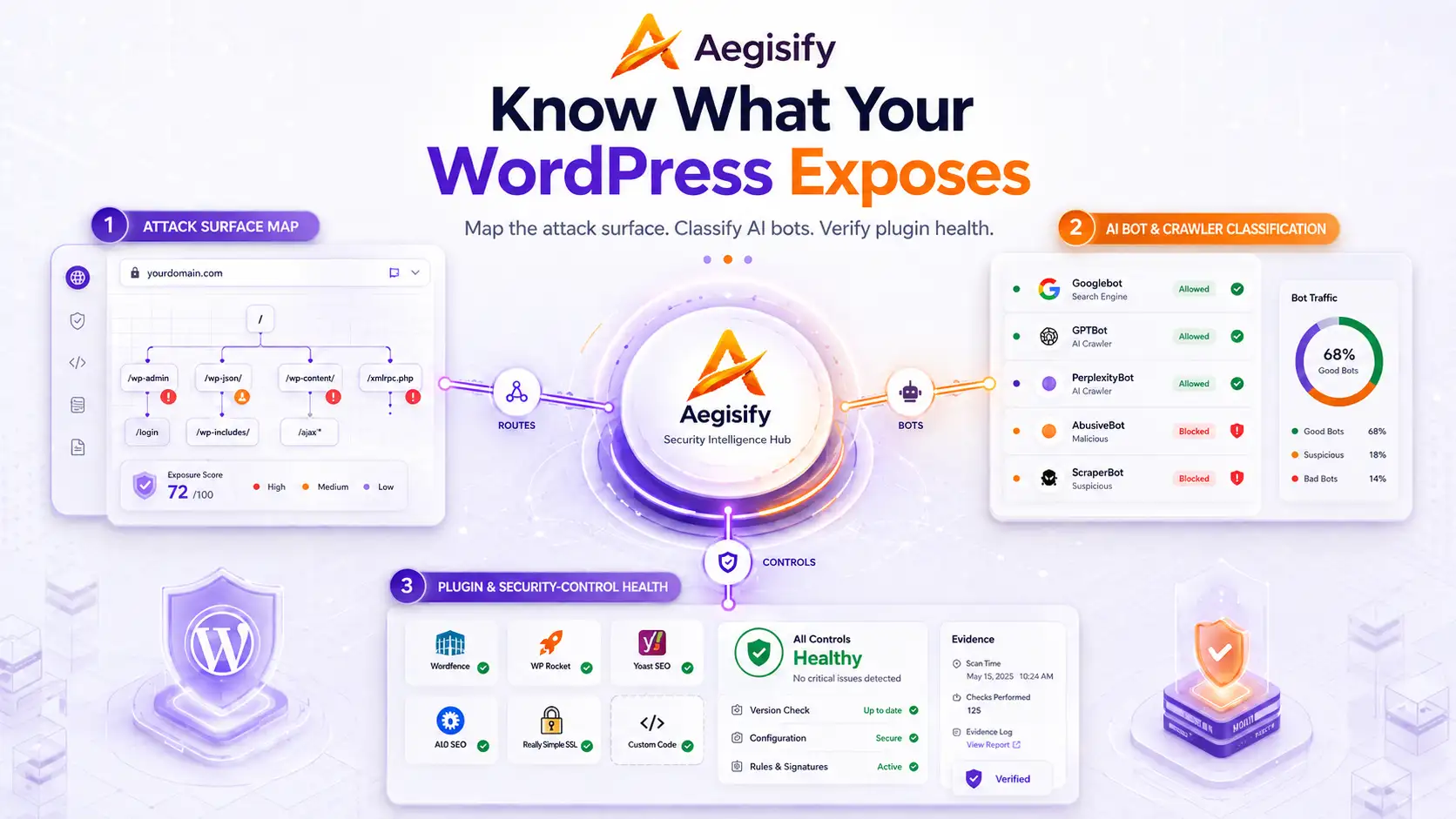
Aegisify SiteMap organizes the discovery inventory and crawler policy. Aegisify Links strengthens internal navigation, campaign paths and destination health. Aegisify SEO supports broader technical analysis, canonical review, metadata, schema, Search Console intelligence and controlled remediation.
Together, the products support a practical loop: publish useful content, connect it internally, expose preferred URLs, guide crawlers, notify supported engines, review evidence and correct problems. The outcome is not guaranteed ranking. It is a clearer WordPress environment with fewer discovery failures.
WordPress Sitemap and Robots.txt FAQ
Does an XML sitemap guarantee Google indexing?
No. A sitemap can improve discovery and communicate preferred URLs, but search engines independently decide what to crawl, index and rank.
Should every WordPress taxonomy be included?
No. Include a category, tag or product archive when it has useful, differentiated content and belongs in the indexing strategy.
Can robots.txt remove a page from search?
Not reliably. Use noindex where appropriate or protect private content with authentication and authorization. Blocking crawling can prevent a search engine from seeing a page-level noindex directive.
Does every site have a crawl-budget problem?
No. Google’s advanced crawl-budget guidance is aimed mainly at very large, rapidly changing or heavily backlogged sites. Smaller sites still benefit from cleaner URLs and fewer crawl traps.
Will an AI discovery file make a page appear in ChatGPT?
No. Crawler access and machine-readable context can support eligibility, but platform policy, indexability, content quality and the user’s query affect retrieval and citation.
Search, Crawler and Product References
Editorial references include the Aegisify SiteMap Product Guide, Google sitemap guidance, Google robots.txt guidance, Google crawl-budget guidance, Google AI features guidance, IndexNow, and OpenAI crawler documentation.