WordPress Application-Layer Firewall Protection: How Aegisify WAF Controls Malicious Requests
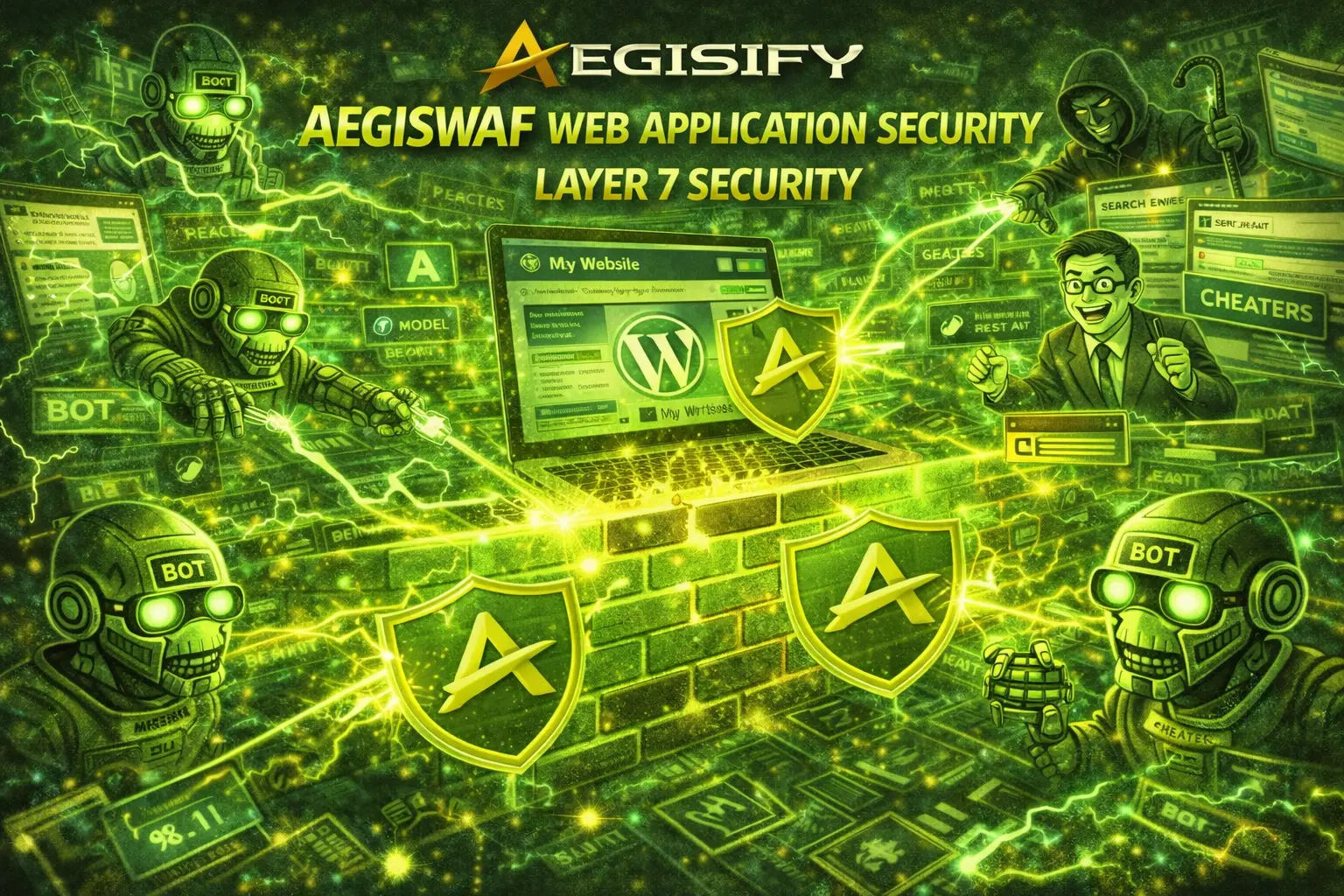
WordPress web application firewall protection, REST API security, bot mitigation, Layer 7 DDoS controls, managed WAF rules, and attack logging are essential when a site supports leads, ecommerce, advertising, portals, or critical workflows. Aegisify WAF helps administrators inspect requests, apply route-aware controls, reduce exposure, and understand why traffic was allowed, challenged, rate-limited, or blocked.
The danger is often invisible. Automated scanners may probe login routes, REST endpoints, search pages, XML-RPC, AJAX actions, plugins, and predictable paths. The goal is to protect sensitive routes, preserve legitimate integrations, and retain enough evidence to tune policy safely.
The Traffic Surge the Agency Could Not See
An agency launches a redesigned WordPress site. Search campaigns begin, social ads are active, forms are collecting leads, and WooCommerce orders are arriving. From the marketing dashboard, the launch looks successful.
Behind that activity, automated tools may test username exposure, send injection payloads, request sensitive paths, repeat expensive searches, and map REST namespaces. Other traffic may be a crawler, payment callback, monitor, mobile app, or integration that merely looks automated.
A production WAF therefore needs visibility, narrow policies, progressive enforcement, trusted-traffic controls, and a rollback path.
Injection Attempts
Requests may contain SQL-oriented payloads, script injection, path traversal, command patterns, or encoded input designed to reach vulnerable application code.
REST API Abuse
Attackers and scanners may enumerate users, repeat unauthenticated requests, send oversized bodies, misuse write methods, or target custom API routes.
Automated Bot Activity
Credential attacks, vulnerability scanning, scraping, route discovery, and repetitive requests can consume resources even when no single request looks severe.
Layer 7 Flooding
Repeated requests to login, search, REST, AJAX, XML-RPC, and dynamic pages can exhaust PHP workers or database capacity without saturating network bandwidth.
Why WordPress Needs Application-Aware Request Controls
A network firewall can filter connections, but it may not understand a WordPress route’s business purpose. An application-aware control can distinguish public content from login, REST writes, search, payment webhooks, exports, or custom endpoints.
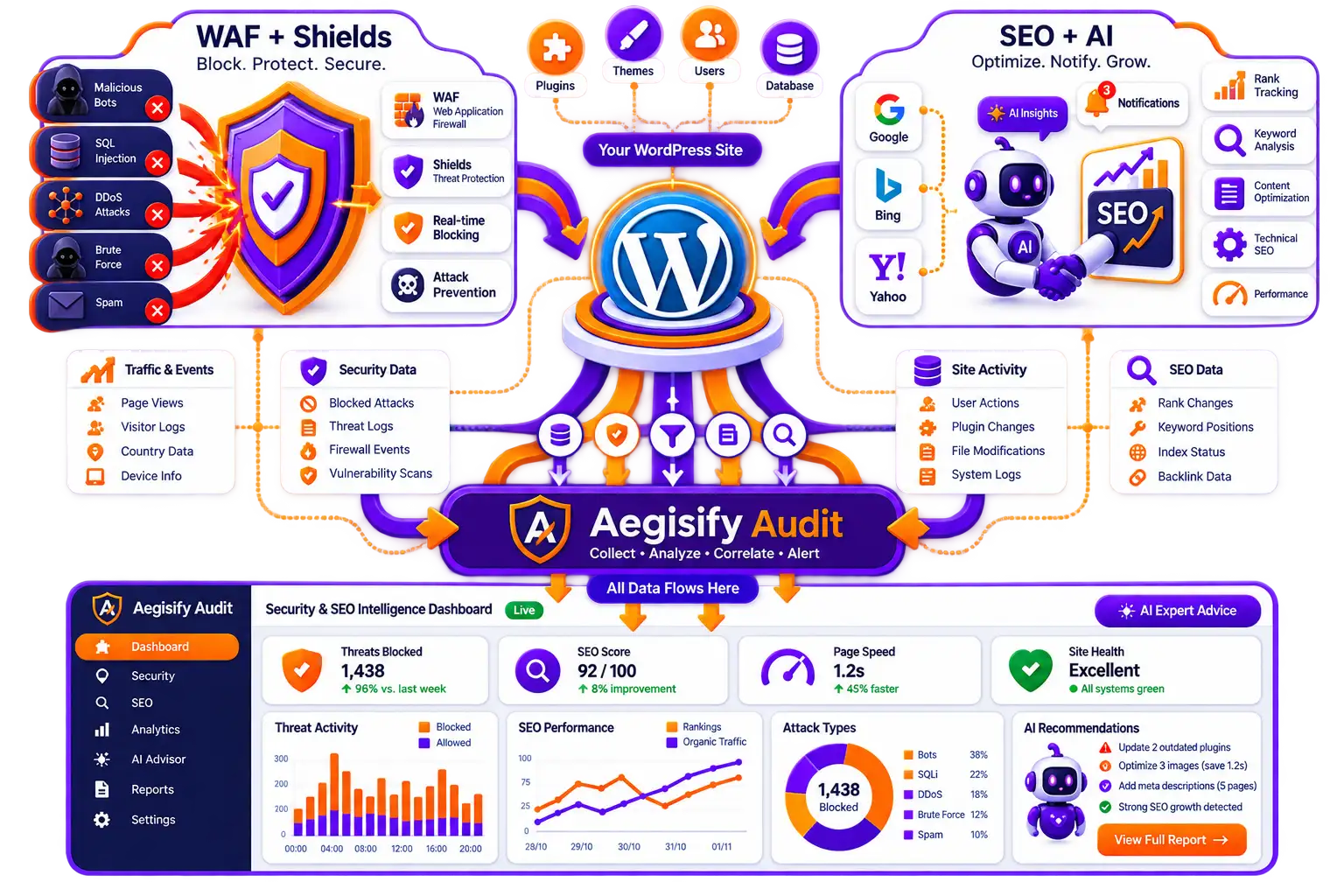
Aegisify WAF provides custom rules, managed categories, heuristics, endpoint policies, API Shield, bot thresholds, access rules, Layer 7 controls, allowlists, logs, alerts, and Attack Story analysis according to configuration and entitlement.
How Aegisify WAF Turns a Request Into a Security Decision
Inspect Common Attack Patterns Without Treating Every Match as Proof
Aegisify WAF includes categories for SQL injection, cross-site scripting, and path traversal, with additional licensed controls depending on the release. Custom rules can target specific paths, methods, tokens, and conditions.
A signature match deserves review; it is not proof of a successful attack. Searches, page-builder payloads, JSON, ecommerce requests, and forms can create false positives. Begin with logging and narrow routes before enforcement.
Protect REST Endpoints Without Breaking Integrations
API Shield can address user enumeration, unauthenticated writes, content types, body size, CORS origins, API-key headers, route allowlists, and progressive thresholds. Licensed controls add per-route patterns, profiles, methods, and limits.
Public forms, payment notifications, mobile apps, headless frontends, and SaaS integrations may legitimately use REST writes. Inventory each client, then create the smallest required exception instead of disabling protection globally.
Reduce Repetitive Abuse Against Expensive WordPress Routes
OWASP distinguishes automated abuse from one-time exploitation. Credential stuffing, scanning, scraping, enumeration, and repeated business-function requests can create damage even when individual requests appear valid.
Aegisify WAF can apply per-path bot thresholds and progressive controls to login, XML-RPC, REST namespaces, search routes, account recovery, exports, and other dynamic operations. Layer 7 protection applies only to requests that reach WordPress or PHP. Volumetric network attacks that saturate bandwidth or hosting infrastructure require a capable host, reverse proxy, CDN, or upstream DDoS provider.
Turn Security Events Into Reviewable Operational Evidence
Detailed logs show the path, method, source, matched control, action, and available context. Attack Story organizes related behavior into a timeline to show targeted routes and whether mitigation changed the pattern.
Evidence supports allowlists, temporary blocks, threshold tuning, false-positive review, and escalation. Protect logs with appropriate access, retention, privacy, and export controls.
| Protection Level | Documented Capability | Best Use |
|---|---|---|
| Free foundation | Inline request inspection, core attack-blocking rules, basic bot and abuse protection, and essential activity logging, according to the current product page. | Establish baseline visibility and protection, understand normal traffic, and evaluate the operational fit. |
| PRO managed protection | Advanced managed rule sets, behavioral detection and threat scoring, REST API and endpoint protection, and additional enforcement controls. | Apply deeper route-aware protection to business-critical, ecommerce, membership, portal, or custom application workflows. |
| PRO availability controls | Application-layer DDoS defenses, advanced bot controls, progressive thresholds, and policy-based enforcement. | Reduce repetitive Layer 7 pressure on login, search, REST, XML-RPC, AJAX, and other dynamic routes. |
| PRO intelligence | Attack Story timelines, real-time alerts, extended logs, exports, reporting, and forensic visibility. | Support tuning, incident review, agency operations, executive reporting, and repeatable response. |
A Safer WAF Rollout: Observe, Classify, Control, Verify
Enable logging and exercise login, forms, checkout, search, APIs, webhooks, scheduled tasks, and administrator workflows.
Separate clearly malicious activity, expected automation, false positives, and unknown traffic requiring investigation.
Use a narrow path and method, temporary source control, challenge, or rate limit before broad permanent blocking.
Confirm business workflows still operate, review the new event pattern, and record the reason and rollback step.
Connect Aegisify WAF With Shield, Audit, and Backup
Aegisify WAF protects the request layer. Shield adds hardening, login controls, file-integrity visibility, headers, and platform monitoring. Audit adds risk discovery, while Backup supports recovery planning.
Together they support discovery, prevention, evidence, monitoring, and recovery. Each layer still requires configuration and human review.
WordPress WAF FAQ
Does Aegisify WAF block requests before WordPress loads?
The current 1.14 guide says the plugin runs inside WordPress and PHP. Frontend inspection occurs during request handling, and REST controls run before the matching REST callback. Public copy should not claim that every request is blocked before PHP, core, or plugins load.
Can Aegisify WAF stop every zero-day exploit?
No. Rules and heuristics can reduce exposure to suspicious patterns, but no WAF can guarantee detection or prevention of every unknown technique or vulnerable code path.
Does Layer 7 protection replace Cloudflare or an upstream DDoS service?
No. Aegisify WAF controls application requests that reach WordPress or PHP. Network and bandwidth floods require hosting, reverse-proxy, CDN, or edge-level protection.
Should new WAF rules begin in blocking mode?
Usually not. Begin with observation, test representative business traffic, and apply the smallest effective control after the evidence is understood.
Does WordPress Plugin Check certify that a plugin is secure?
No. Plugin Check helps screen code for security, compatibility, and repository compliance issues. It is a useful development and review tool, not a guarantee that a plugin is vulnerability-free.
WordPress Firewall and Security References
Editorial references include the Aegisify WAF Product Guide, Aegisify WAF product page, OWASP Core Rule Set overview, OWASP Automated Threats to Web Applications, and WordPress Plugin Check update guidance.