Aegisify SEO Commerce: All-Inclusive WooCommerce SEO Without Separate Add-Ons
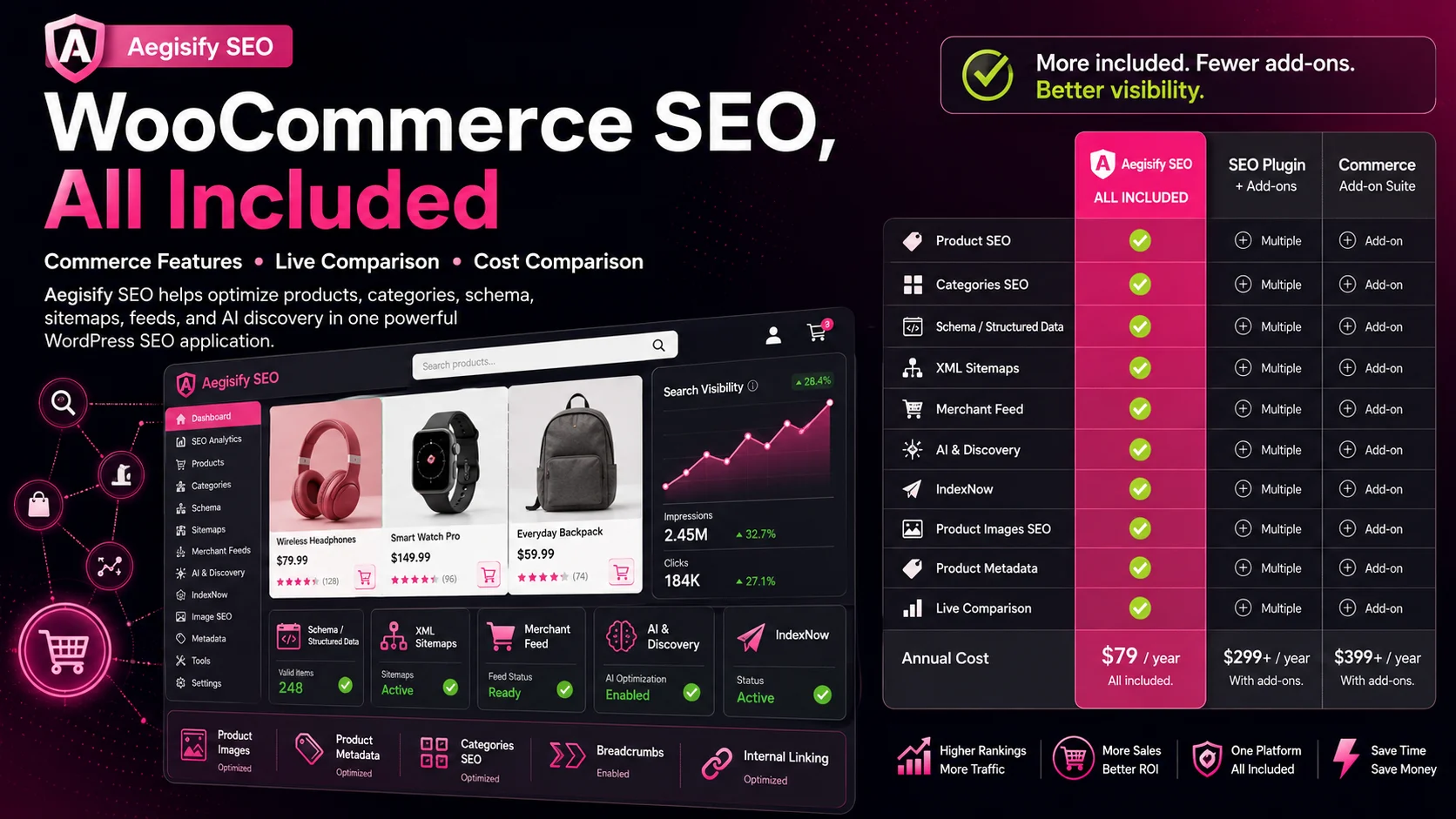
Aegisify SEO Commerce gives WooCommerce stores one connected system for product SEO, structured data, XML sitemaps, merchant feeds, IndexNow notifications, catalog indexing controls, social metadata, and machine-readable product discovery.
WooCommerce SEO often becomes fragmented. A store may use one plugin for product metadata, another for schema, another for sitemaps, and separate services for merchant feeds, AI content, analytics, or indexing notifications. Those tools may publish different canonical URLs, prices, stock states, product identifiers, or indexing rules.
The Real Cost of WooCommerce SEO
The lowest advertised license price does not always represent the full cost of an ecommerce SEO workflow. Store owners may also pay for WooCommerce extensions, AI credits, rank tracking, analytics, image optimization, schema tools, redirects, feeds, and agency licenses.
Operational cost matters too. Every additional plugin requires configuration, updates, compatibility testing, troubleshooting, and renewal management. Conflicting schema, duplicate metadata, inconsistent canonical tags, and mismatched product feeds can consume developer and marketing time.
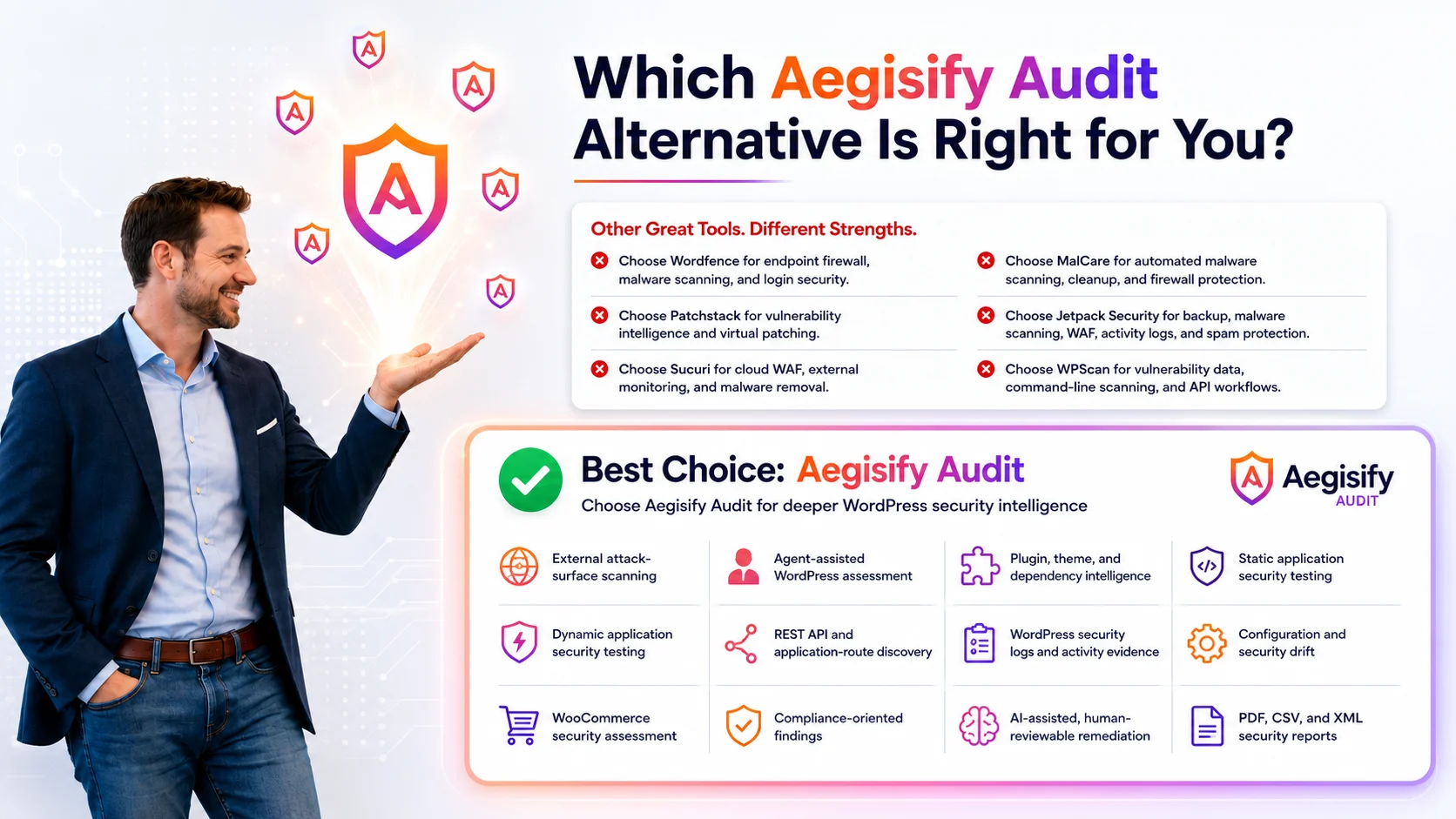
Aegisify takes a different approach. The WooCommerce SEO capabilities described here are included within the applicable Aegisify SEO offering. A separate Aegisify Commerce SEO add-on is not required.
| SEO Application | Public Pricing Snapshot | WooCommerce Packaging | Cost Considerations |
|---|---|---|---|
| Aegisify SEO | Included with the applicable Aegisify Audit plan. | Commerce SEO capabilities are included in the SEO application. | No separate Aegisify Commerce SEO extension is required for the features described here. |
| Yoast WooCommerce SEO | $178.80 per year, excluding VAT. | Dedicated WooCommerce package with product SEO, schema, sitemaps, AI tools, and premium features. | Purchased as an annual ecommerce package. |
| Rank Math PRO | Promotional price of $95.88 per year, with a published renewal equivalent of $107.88 per year, excluding VAT. | WooCommerce PRO features are part of the PRO offering. | Pricing and supported website use differ by plan. |
| All in One SEO | Advertised starting price of approximately $49.50 per year. | WooCommerce SEO, product schema, dynamic attributes, shipping, returns, and variation controls are advertised. | Features, AI credits, website allowances, and introductory pricing depend on the selected plan. |
| SEOPress PRO | $49 per year for one website. | WooCommerce SEO, product schema, product sitemaps, gallery images, and site auditing are included in PRO. | AI credits and Insights are listed separately. |
What Aegisify SEO Commerce Includes
WooCommerce product information remains the factual source while Aegisify SEO coordinates how approved public data is presented to search engines, merchant systems, social platforms, and machine-readable discovery services.
WooCommerce Product and Category XML Sitemaps
Aegisify SEO can detect WooCommerce and create sitemap coverage for eligible public commerce content. That can include published products, the Shop archive, product categories, product tags, public brands, public product attributes, product images, gallery images, and category thumbnails.
Private products, drafts, password-protected products, noindex products, orders, customer records, carts, checkout pages, and private WooCommerce data are excluded.
A sitemap helps search engines discover important URLs. It does not guarantee crawling, indexing, ranking, traffic, or rich results.
Product, Offer, and Product Variation Schema
Aegisify SEO reads factual product information from WooCommerce and organizes it into structured data that search engines can interpret.
Supported details can include product name, canonical URL, descriptions, SKU, GTIN, MPN, brand, images, price, sale price, currency, sale expiration, availability, condition, categories, attributes, ratings, reviews, shipping information, and return policies.
Variable products can use ProductGroup relationships, variation attributes, individual offers, prices, availability, identifiers, and parent-child connections. Schema ownership controls help reduce duplicate Product objects when another component already publishes structured data.
Product Metadata and Social Commerce Details
Aegisify SEO provides WooCommerce-aware variables for product titles and meta descriptions, including product name, SKU, GTIN, MPN, brand, price, sale price, currency, stock status, category, and public attributes.
Product pages can also publish Open Graph commerce information such as price, currency, availability, condition, retailer item ID, and brand.
Using the WooCommerce product record as the source helps keep search snippets, social previews, schema, feeds, and product pages aligned.
Merchant Product Feeds
Aegisify SEO can generate a merchant product feed from the same WooCommerce data used for page metadata and structured data.
Eligible fields can include product or variation ID, title, description, canonical URL, images, price, sale price, currency, availability, condition, brand, GTIN, MPN, SKU, category path, variation group, color, size, material, pattern, and configured shipping information.
A shared factual source reduces the risk that the product page says one thing while the merchant feed or schema says something else.
IndexNow Notifications
WooCommerce catalogs change frequently. Prices, inventory, variations, categories, brands, attributes, and availability can change throughout the day.
Aegisify SEO can notify participating search engines through IndexNow when supported product or taxonomy changes occur. Events can include product updates, price and stock changes, variation changes, taxonomy updates, and product deletion or unpublishing.
IndexNow reports that a URL changed. It does not guarantee immediate crawling or indexing.
Catalog Indexing and Canonical Controls
More indexed URLs do not automatically produce better SEO. WooCommerce stores often create filtered, sorted, duplicated, or temporary URLs that compete with stronger product and category pages.
Aegisify SEO provides controls for hidden products, discontinued products, out-of-stock products, products without prices, non-purchasable products, empty taxonomies, layered navigation, price filters, rating filters, sorting parameters, product-count parameters, duplicate attribute archives, and paginated shop or taxonomy pages.
The objective is to help search engines focus on canonical, public, customer-facing URLs with clear search intent.
AI Commerce Catalog
Aegisify SEO Commerce can create paginated JSON resources containing approved public product information for machine-readable discovery.
The catalog can expose canonical URLs, names, descriptions, SKU, GTIN, MPN, brand, categories, public attributes, prices, currency, availability, condition, images, ratings, grouped products, and variations.
The catalog remains separate from private WooCommerce operations. Orders, customer addresses, payment details, gateway credentials, private inventory notes, and sensitive store data are not intended for public exposure.
Machine-readable product data can make a catalog easier for authorized crawlers and retrieval systems to process. It does not guarantee that an AI platform will crawl, cite, recommend, or display a product.
One Product Record, Multiple SEO Destinations
Aegisify SEO Commerce connects the destinations that use WooCommerce product information.
When these destinations use the same factual source, stores have a better opportunity to maintain consistent canonical URLs, identifiers, prices, availability, images, and variation relationships.
This model also makes troubleshooting easier. If a price, stock state, identifier, image, or URL changes, the SEO team can review one source and verify how that change appears across the system.
Who Benefits From Aegisify SEO Commerce?
Aegisify SEO also supports businesses that want search and AI discovery resources without exposing private commerce data, and operators who want fewer overlapping SEO plugins to configure, update, and troubleshoot.
It does not replace accurate product descriptions, strong images, useful category pages, competitive offers, clear policies, fast performance, or ongoing measurement through search-engine webmaster tools. It provides a technical foundation that helps those efforts remain consistent and discoverable.
Frequently Asked Questions
Does Aegisify SEO guarantee product rankings?
No. No responsible SEO application can guarantee rankings, indexing, traffic, rich results, merchant approval, AI citations, or recommendations. Aegisify SEO improves technical consistency, discovery, metadata, structured data, and catalog management.
Does every WooCommerce record belong in a sitemap?
No. Orders, customer accounts, carts, checkout pages, private products, drafts, password-protected products, noindex content, and private records should not be treated as public search pages.
Are WooCommerce variations supported?
Yes. Eligible public variations can be represented through ProductGroup relationships, variation-specific offers, attributes, prices, availability, identifiers, and parent-product connections.
Does Aegisify AI invent missing product information?
It should not. Prices, inventory, identifiers, reviews, specifications, shipping promises, return terms, certifications, and safety claims must come from factual store data or approved human input.
Is a separate Aegisify Commerce SEO add-on required?
No. The Commerce capabilities described in this release are included within the applicable Aegisify SEO offering.